•
•
•
•
•
•
1
•
•
2
•
•
3
•
•
4
•
•
5
•
•
6
•
•
7
•
•
8
•
•
9
•
•
10
•
•
11
•
•
12
•
•
13
•
•
14
•
•
15
•
•
16
•
•
17
•
•
18
•
•
19
•
•
20
•
•
21
•
•
22
•
•
23
•
•
24
•
•
25
•
•
•
•
•
•
•
•
•
•
•
1
•
•
2
•
•
3
•
•
4
•
•
5
•
•
6
•
•
7
•
•
8
•
•
9
•
•
10
•
•
11
•
•
12
•
•
13
•
•
14
•
•
15
•
•
16
•
•
17
•
•
18
•
•
19
•
•
20
•
•
21
•
•
22
•
•
23
•
•
24
•
•
25
•
•
26
•
•
27
•
•
28
•
•
29
•
•
30
•
•
•
•
•
•
•
•
•
•
•
•
1
•
•
2
•
•
3
•
•
4
•
•
5
•
•
6
•
•
7
•
•
8
•
•
9
•
•
10
•
•
11
•
•
12
•
•
13
•
•
14
•
•
15
•
•
16
•
•
•
•
•
•
•
•
•
•
1
•
•
2
•
•
3
•
•
4
•
•
5
•
•
6
•
•
7
•
•
8
•
•
9
•
•
10
•
•
11
•
•
12
•
•
13
•
•
14
•
•
15
•
•
16
•
•
•
•
•
•
•
•
1
•
•
2
•
•
3
•
•
4
•
•
5
•
•
6
•
•
7
•
•
8
•
•
9
•
•
10
•
•
11
•
•
12
•
•
13
•
•
14
•
•
15
•
•
16
•
•
•
•
PRODUCT DESIGNER
PRODUCT DESIGNER
PRODUCT DESIGNER
Gorgias Conversational Help Center: From search to resolution
Gorgias Conversational Help Center: From search to resolution
Gorgias Conversational Help Center: From search to resolution
Gorgias Conversational Help Center: From search to resolution
Gorgias empowers 15,000+ ecommerce brands to centralize and automate customer support across chat, email, and social media, yet the Help Center remained unchanged. Shoppers still search, skim articles, and self-diagnose, often leaving without answers and needing to escalate.
In early 2025, I led design and research for a vision and pilot that layered a conversational AI experience on top of the existing Help Center. Shoppers can now ask questions in natural language and receive accurate, contextual answers powered by our AI Agent, guiding them all the way to resolution.
Gorgias empowers 15,000+ ecommerce brands to centralize and automate customer support across chat, email, and social media, yet the Help Center remained unchanged. Shoppers still search, skim articles, and self-diagnose, often leaving without answers and needing to escalate.
In early 2025, I led design and research for a vision and pilot that layered a conversational AI experience on top of the existing Help Center. Shoppers can now ask questions in natural language and receive accurate, contextual answers powered by our AI Agent, guiding them all the way to resolution.
Gorgias empowers 15,000+ ecommerce brands to centralize and automate customer support across chat, email, and social media, yet the Help Center remained unchanged. Shoppers still search, skim articles, and self-diagnose, often leaving without answers and needing to escalate.
In early 2025, I led design and research for a vision and pilot that layered a conversational AI experience on top of the existing Help Center. Shoppers can now ask questions in natural language and receive accurate, contextual answers powered by our AI Agent, guiding them all the way to resolution.
Impact
Impact
Advanced company strategy: The project was a cornerstone of a Shopper Experience Vision I co-developed with a senior designer, reshaping the end-to-end journey to prioritize conversation at every touchpoint.
Validated approach to adoption: The pilot confirmed that conversational UI reduced effort and increased resolution rates, while highlighting that a small subset still used manual navigation.
Built scalable infrastructure: The patterns established became the blueprint for Gorgias’s evolving AI UI platform.
Advanced company strategy: The project was a cornerstone of a Shopper Experience Vision I co-developed with a senior designer, reshaping the end-to-end journey to prioritize conversation at every touchpoint.
Validated approach to adoption: The pilot confirmed that conversational UI reduced effort and increased resolution rates, while highlighting that a small subset still used manual navigation.
Built scalable infrastructure: The patterns established became the blueprint for Gorgias’s evolving AI UI platform.
Advanced company strategy: The project was a cornerstone of a Shopper Experience Vision I co-developed with a senior designer, reshaping the end-to-end journey to prioritize conversation at every touchpoint.
Validated approach to adoption: The pilot confirmed that conversational UI reduced effort and increased resolution rates, while highlighting that a small subset still used manual navigation.
Built scalable infrastructure: The patterns established became the blueprint for Gorgias’s evolving AI UI platform.
Role
Role
Role
Product Design & Research, Gorgias (B2B SaaS)
Product Design & Research, Gorgias (B2B SaaS)
Product Design & Research, Gorgias (B2B SaaS)
Product Design & Research, Gorgias (B2B SaaS)
Duration
Duration
4 months, early 2025
4 months, early 2025
4 months, early 2025
Collaborators
Collaborators
Vina R., Product Manager
Natasha P., Senior Product Designer
3 Engineers
Vina R., Product Manager
Natasha P., Senior Product Designer
3 Engineers
Vina R., Product Manager
Natasha P., Senior Product Designer
3 Engineers
Impact
Advanced company strategy: The project was a cornerstone of a Shopper Experience Vision I co-developed with a senior designer, reshaping the end-to-end journey to prioritize conversation at every touchpoint.
Validated approach to adoption: The pilot confirmed that conversational UI reduced effort and increased resolution rates, while highlighting that a small subset still used manual navigation.
Built scalable infrastructure: The patterns established became the blueprint for Gorgias’s evolving AI UI platform.
Self-serve is no longer enough
Help Centers have traditionally been a brand’s trust anchor — the primary place where shoppers try to answer product questions and resolve issues on their own. In fact, 81% of shoppers prefer self-service before contacting support.
But across industries, Help Centers haven’t evolved.
They remain dense and text-heavy, structured around articles, not outcomes, and frustrating to navigate.
Meanwhile, shoppers’ expectations are rapidly changing.
As AI tools become part of daily life, shoppers increasingly expect support that mirrors these experiences: instant, conversational, and context-aware. Traditional Help Centers no longer fit the expectation of “just ask and get an answer.”
Opportunity
This shift in behavior creates a strategic opportunity for Gorgias to:
expand automation in a way that drives revenue and support efficiency, while modernizing the Help Center for an AI-first world that matches evolving shopper expectations.
Help Centers have traditionally been a brand’s trust anchor — the primary place where shoppers try to answer product questions and resolve issues on their own. In fact, 81% of shoppers prefer self-service before contacting support.
But across industries, Help Centers haven’t evolved.
They remain dense and text-heavy, structured around articles, not outcomes, and frustrating to navigate.
Meanwhile, shoppers’ expectations are rapidly changing.
As AI tools become part of daily life, shoppers increasingly expect support that mirrors these experiences: instant, conversational, and context-aware. Traditional Help Centers no longer fit the expectation of “just ask and get an answer.”
Opportunity
This shift in behavior creates a strategic opportunity for Gorgias to:
expand automation in a way that drives revenue and support efficiency, while modernizing the Help Center for an AI-first world that matches evolving shopper expectations.
Help Centers have traditionally been a brand’s trust anchor — the primary place where shoppers try to answer product questions and resolve issues on their own. In fact, 81% of shoppers prefer self-service before contacting support.
But across industries, Help Centers haven’t evolved.
They remain dense and text-heavy, structured around articles, not outcomes, and frustrating to navigate.
Meanwhile, shoppers’ expectations are rapidly changing.
As AI tools become part of daily life, shoppers increasingly expect support that mirrors these experiences: instant, conversational, and context-aware. Traditional Help Centers no longer fit the expectation of “just ask and get an answer.”
Opportunity
This shift in behavior creates a strategic opportunity for Gorgias to:
expand automation in a way that drives revenue and support efficiency, while modernizing the Help Center for an AI-first world that matches evolving shopper expectations.
The problem
An information maze
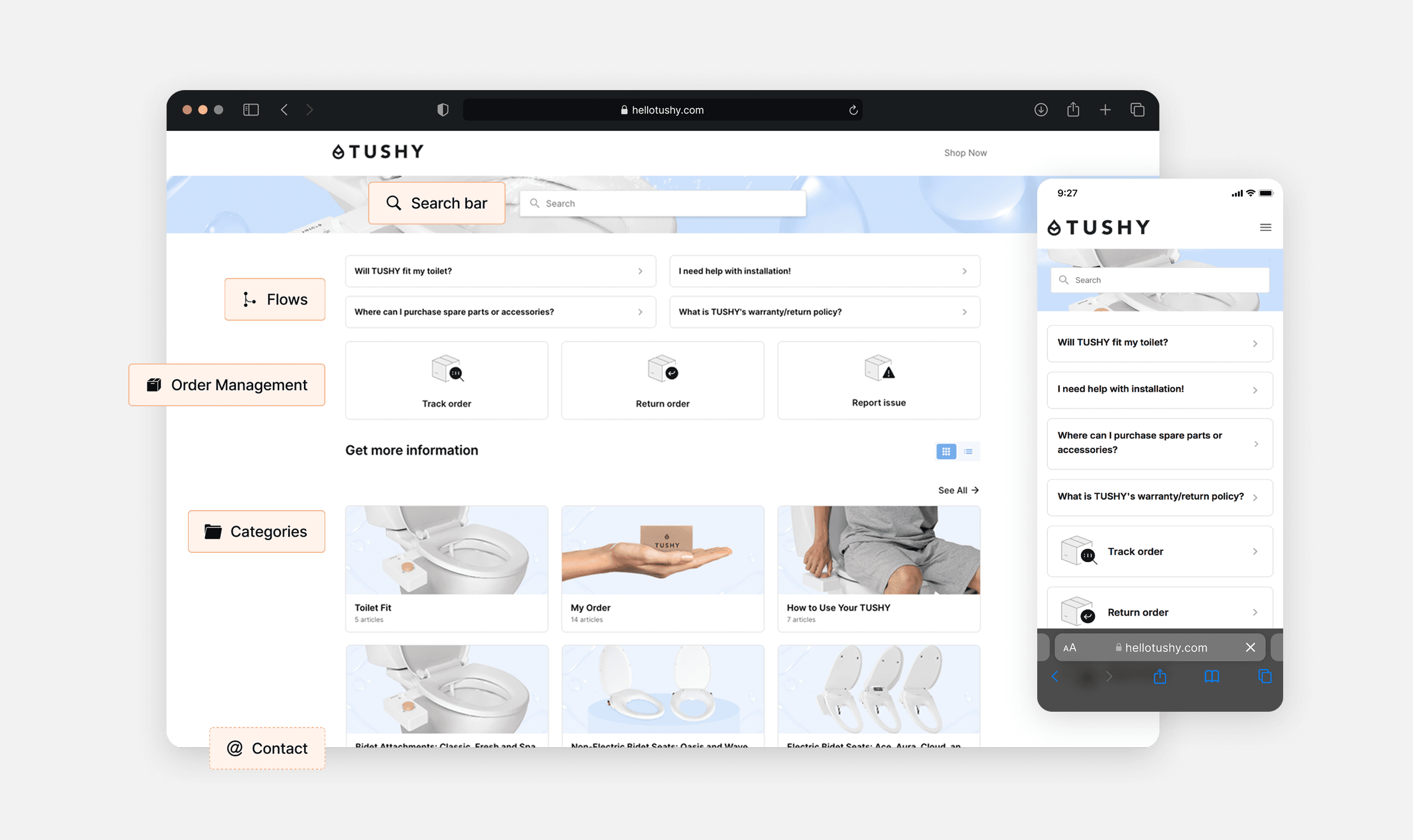
The Help Center overwhelms shoppers with competing entry points that mirror internal structure, not their expectations, and feels even more cluttered on mobile.
Over 60% start with search, making it the primary path. Despite this, it remains a key automation channel, as Flows and Order Management deliver fast, relevant self-service that shoppers prefer.
The Help Center overwhelms shoppers with competing entry points that mirror internal structure, not their expectations, and feels even more cluttered on mobile.
Over 60% start with search, making it the primary path. Despite this, it remains a key automation channel, as Flows and Order Management deliver fast, relevant self-service that shoppers prefer.
The Help Center overwhelms shoppers with competing entry points that mirror internal structure, not their expectations, and feels even more cluttered on mobile.
Over 60% start with search, making it the primary path. Despite this, it remains a key automation channel, as Flows and Order Management deliver fast, relevant self-service that shoppers prefer.
High reliance on shopper effort
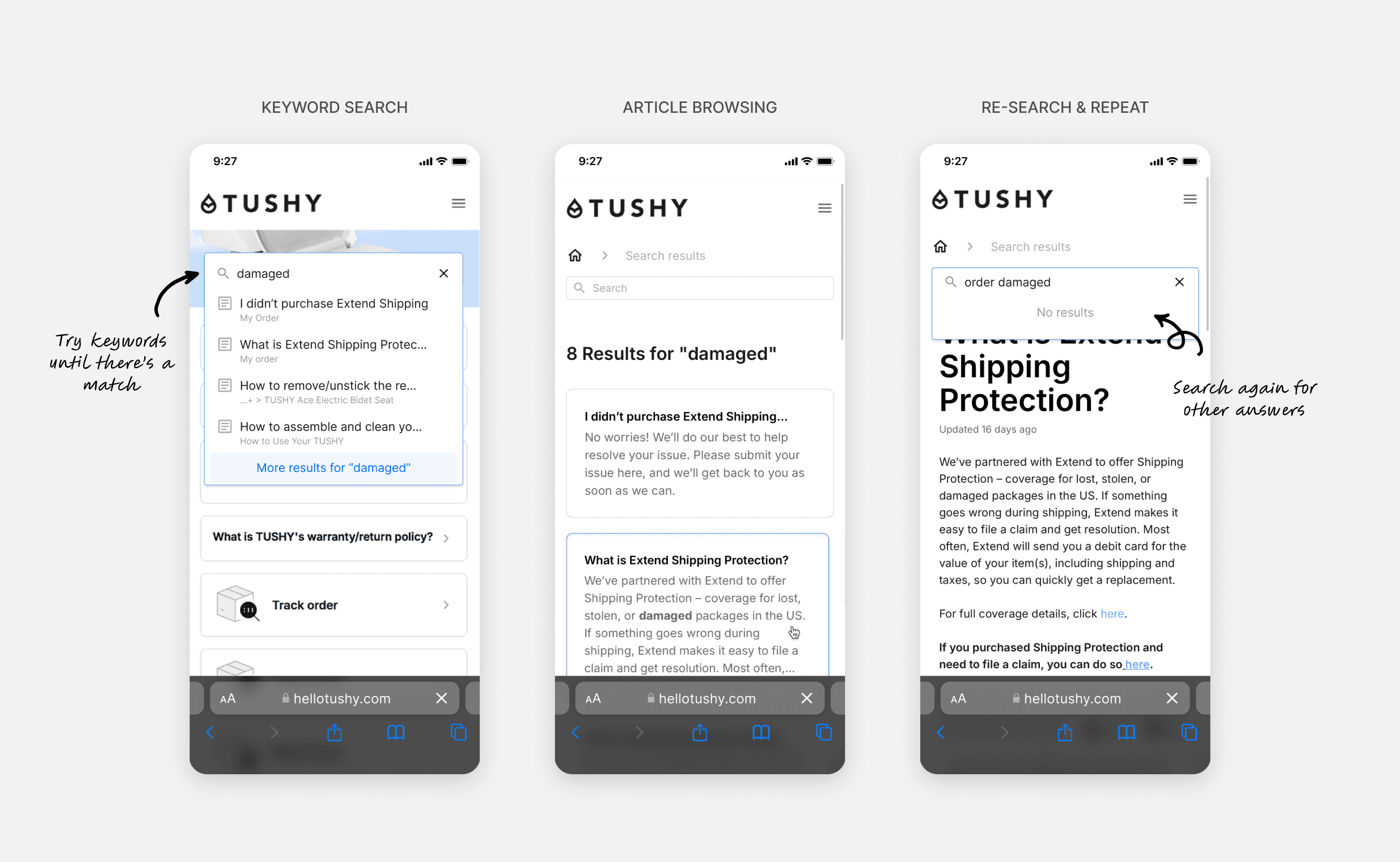
Search, the primary entry point, often fails to deliver relevant answers due to poor understanding of language, weak semantic matching, and incomplete content. Shoppers are forced to repeat searches and skim irrelevant results, driving frustration and lower resolution rates.
In one enterprise sample, 52% of 36,674 searches returned zero results, showing self-service is failing at scale.
Search, the primary entry point, often fails to deliver relevant answers due to poor understanding of language, weak semantic matching, and incomplete content. Shoppers are forced to repeat searches and skim irrelevant results, driving frustration and lower resolution rates.
In one enterprise sample, 52% of 36,674 searches returned zero results, showing self-service is failing at scale.
Search, the primary entry point, often fails to deliver relevant answers due to poor understanding of language, weak semantic matching, and incomplete content. Shoppers are forced to repeat searches and skim irrelevant results, driving frustration and lower resolution rates.
In one enterprise sample, 52% of 36,674 searches returned zero results, showing self-service is failing at scale.
Dead-ends and blind escalation
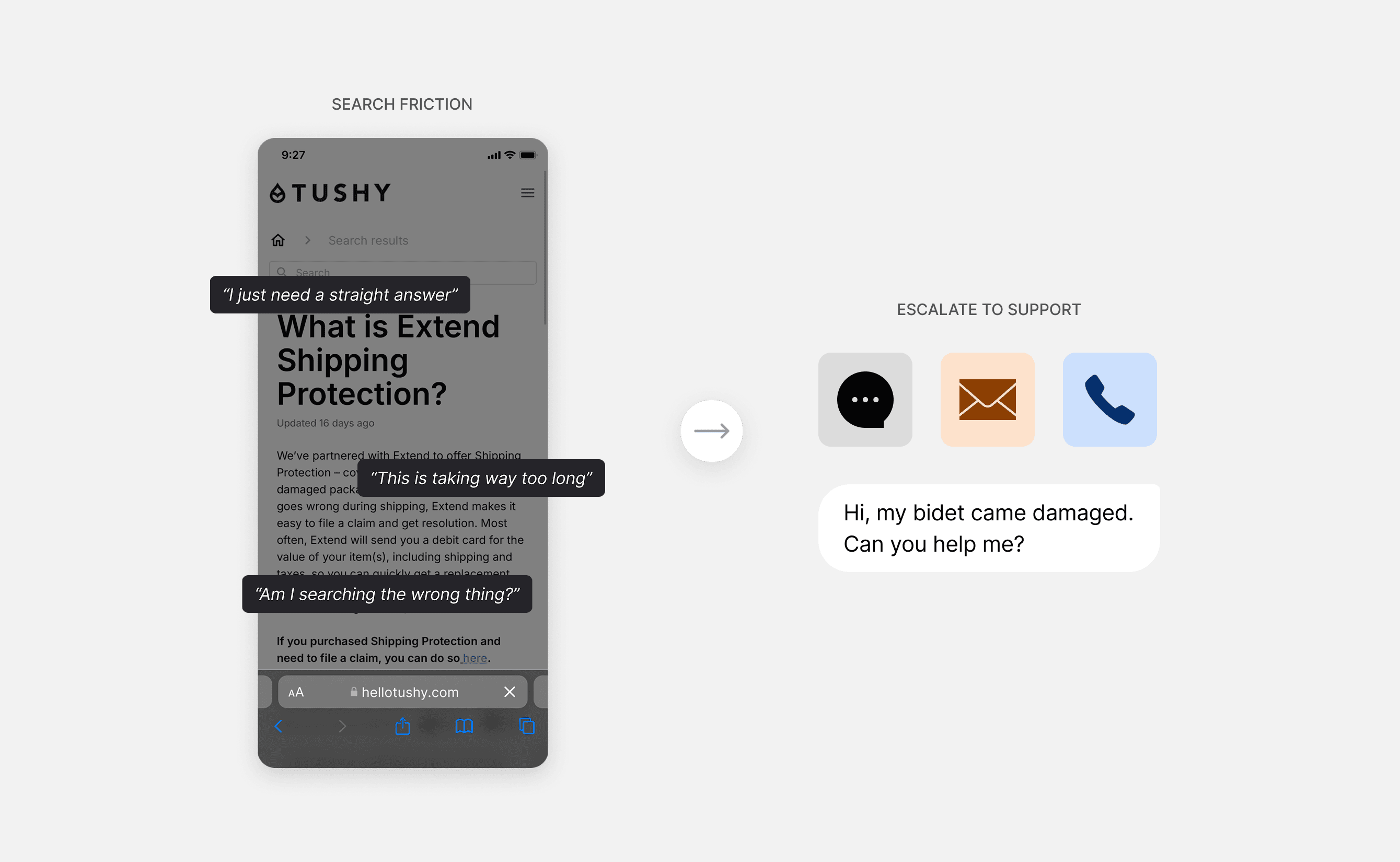
Even when shoppers find articles, they often don’t resolve their issue. The Help Center’s generic design leaves unique problems unaddressed and can feel impersonal or unhelpful.
Without related suggestions or a smooth path forward, shoppers eventually contact support, losing context and slowing resolution.
Even when shoppers find articles, they often don’t resolve their issue. The Help Center’s generic design leaves unique problems unaddressed and can feel impersonal or unhelpful.
Without related suggestions or a smooth path forward, shoppers eventually contact support, losing context and slowing resolution.
Even when shoppers find articles, they often don’t resolve their issue. The Help Center’s generic design leaves unique problems unaddressed and can feel impersonal or unhelpful.
Without related suggestions or a smooth path forward, shoppers eventually contact support, losing context and slowing resolution.
From hypotheses to a Vision-first approach
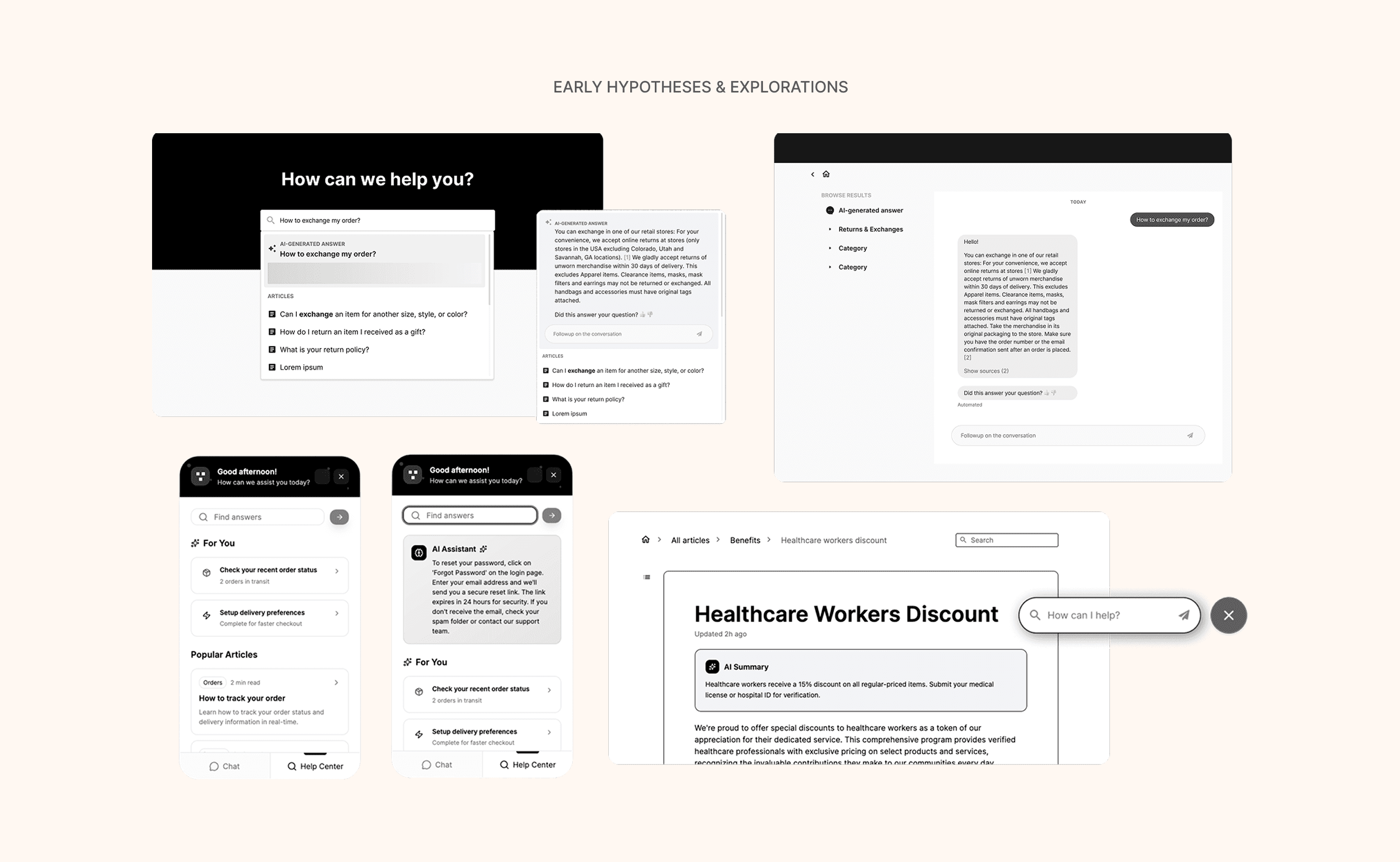
To explore faster, more effective self-serve support, we used a Thoughtful Execution Tree to generate MVP hypotheses from our research. Ideas included:
Embedding the Help Center into Chat
Adding AI features such as Summaries, Smart Feedback, Nudges, or an AI Mode in search
For each, we defined impact metrics to estimate effects on shoppers, the business, and merchants (automation, time to resolution). While these concepts could help shoppers find answers faster, they felt like patches on the existing model rather than proactive, future-facing solutions.
To explore faster, more effective self-serve support, we used a Thoughtful Execution Tree to generate MVP hypotheses from our research. Ideas included:
Embedding the Help Center into Chat
Adding AI features such as Summaries, Smart Feedback, Nudges, or an AI Mode in search
For each, we defined impact metrics to estimate effects on shoppers, the business, and merchants (automation, time to resolution). While these concepts could help shoppers find answers faster, they felt like patches on the existing model rather than proactive, future-facing solutions.
To explore faster, more effective self-serve support, we used a Thoughtful Execution Tree to generate MVP hypotheses from our research. Ideas included:
Embedding the Help Center into Chat
Adding AI features such as Summaries, Smart Feedback, Nudges, or an AI Mode in search
For each, we defined impact metrics to estimate effects on shoppers, the business, and merchants (automation, time to resolution). While these concepts could help shoppers find answers faster, they felt like patches on the existing model rather than proactive, future-facing solutions.
From hypotheses to a Vision-first approach
Leadership push and vision alignment
To explore faster, more effective self-serve support, we used a Thoughtful Execution Tree to generate MVP hypotheses from our research. Ideas included:
Embedding the Help Center into Chat
Adding AI features such as Summaries, Smart Feedback, Nudges, or an AI Mode in search
For each, we defined impact metrics to estimate effects on shoppers, the business, and merchants (automation, time to resolution). While these concepts could help shoppers find answers faster, they felt like patches on the existing model rather than proactive, future-facing solutions.
During ideation, new leadership questioned how the project would fit into the end-to-end shopping experience. The Help Center was just one touchpoint — shoppers also interact with browsing and purchasing flows. We needed to understand how this project could influence the entire journey.
I also recognized that current AI Agent capabilities and UI patterns limited our ability to deliver a solution that would meet shopper expectations and differentiate us from competitors.
We used vision as an alignment tool, framing discussions around a long-term shopper experience to guide pilot scope and product-market fit, while demonstrating the impact designers can have on strategy.
Defining the end-to-end shopper vision
Working closely with a senior designer in the AI tribe, we aligned on the shopper journey stages before and after the Help Center — from discovery to purchase.
From this work, we defined a future-facing vision: a mobile-first, AI-driven platform that supports the entire shopping journey within a single chat window, allowing shoppers to browse, get answers, and complete purchases seamlessly.
Once the vision was clear, we scaled the project back to focus solely on the Help Center, ensuring all stakeholders were aligned on the core direction. The Help Center became one touchpoint in this larger, cohesive shopper journey, informed by the long-term vision.
Leadership push and vision alignment
During ideation, new leadership questioned how the project would fit into the end-to-end shopping experience. The Help Center was just one touchpoint — shoppers also interact with browsing and purchasing flows. We needed to understand how this project could influence the entire journey.
I also recognized that current AI Agent capabilities and UI patterns limited our ability to deliver a solution that would meet shopper expectations and differentiate us from competitors.
We used vision as an alignment tool, framing discussions around a long-term shopper experience to guide pilot scope and product-market fit, while demonstrating the impact designers can have on strategy.
Defining the end-to-end shopper vision
Working closely with a senior designer in the AI tribe, we aligned on the shopper journey stages before and after the Help Center — from discovery to purchase.
From this work, we defined a future-facing vision: a mobile-first, AI-driven platform that supports the entire shopping journey within a single chat window, allowing shoppers to browse, get answers, and complete purchases seamlessly.
Once the vision was clear, we scaled the project back to focus solely on the Help Center, ensuring all stakeholders were aligned on the core direction. The Help Center became one touchpoint in this larger, cohesive shopper journey, informed by the long-term vision.
During ideation, new leadership questioned how the project would fit into the end-to-end shopping experience. The Help Center was just one touchpoint — shoppers also interact with browsing and purchasing flows. We needed to understand how this project could influence the entire journey.
I also recognized that current AI Agent capabilities and UI patterns limited our ability to deliver a solution that would meet shopper expectations and differentiate us from competitors.
We used vision as an alignment tool, framing discussions around a long-term shopper experience to guide pilot scope and product-market fit, while demonstrating the impact designers can have on strategy.
Defining the end-to-end shopper vision
Working closely with a senior designer in the AI tribe, we aligned on the shopper journey stages before and after the Help Center — from discovery to purchase.
From this work, we defined a future-facing vision: a mobile-first, AI-driven platform that supports the entire shopping journey within a single chat window, allowing shoppers to browse, get answers, and complete purchases seamlessly.
Once the vision was clear, we scaled the project back to focus solely on the Help Center, ensuring all stakeholders were aligned on the core direction. The Help Center became one touchpoint in this larger, cohesive shopper journey, informed by the long-term vision.
The Vision: Redefining the Help Center experience
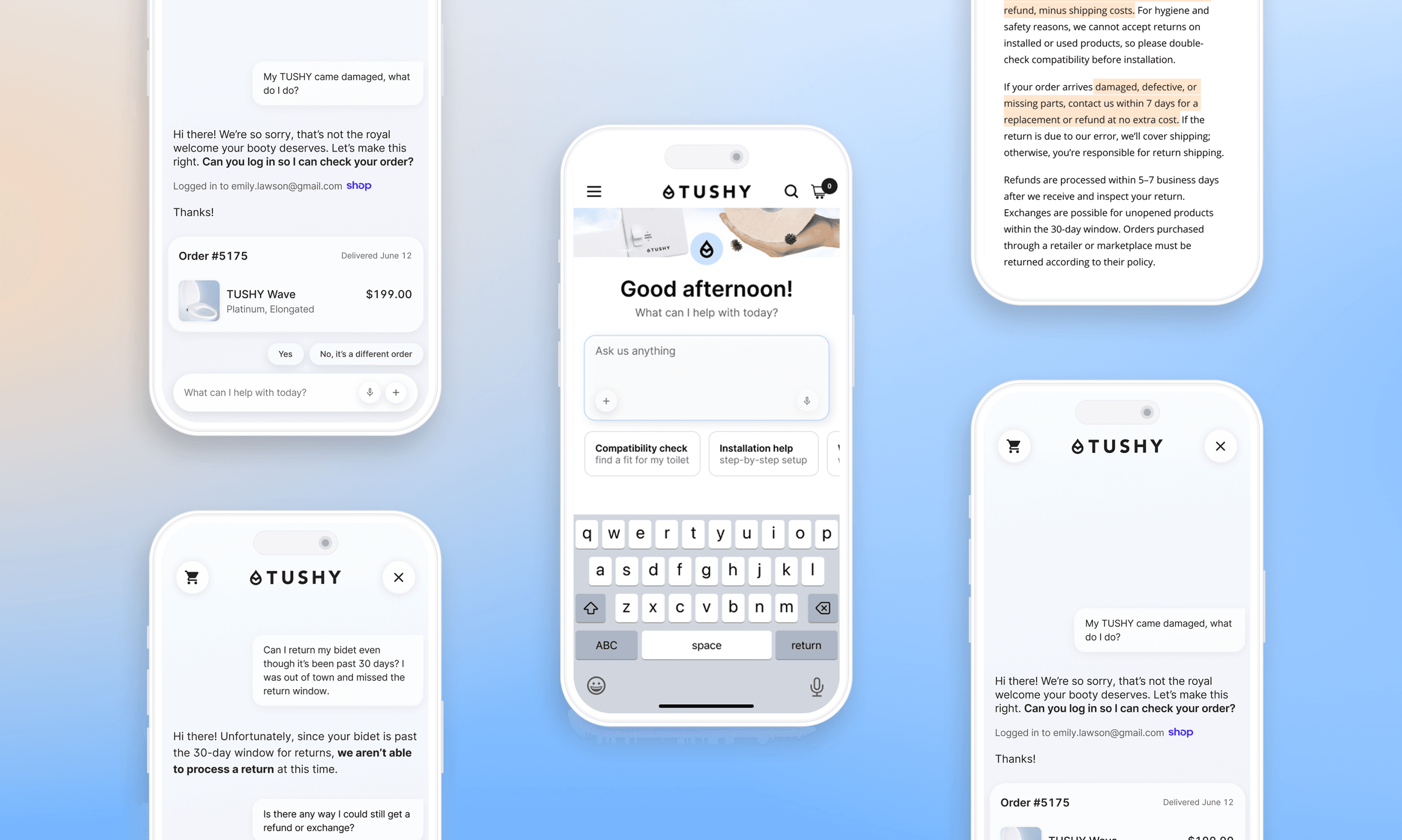
The future Help Center is no longer just a repository of answers. By becoming a conversational companion, it engages shoppers, anticipates their needs, and delivers instant, personalized support, while seamlessly escalating to human agents when necessary. This shift transforms self-service from passive search into interactive guidance, boosting trust, satisfaction, and automation.
The future Help Center is no longer just a repository of answers. By becoming a conversational companion, it engages shoppers, anticipates their needs, and delivers instant, personalized support, while seamlessly escalating to human agents when necessary. This shift transforms self-service from passive search into interactive guidance, boosting trust, satisfaction, and automation.
The future Help Center is no longer just a repository of answers. By becoming a conversational companion, it engages shoppers, anticipates their needs, and delivers instant, personalized support, while seamlessly escalating to human agents when necessary. This shift transforms self-service from passive search into interactive guidance, boosting trust, satisfaction, and automation.
Turning queries into dialogue
Most shoppers head straight to the search bar, guessing keywords and clicking through articles until something helps. Now, imagine a simple prompt in a familiar interface: “How can I help you?”
Keyword guesswork becomes a real conversation with AI Agent, which understands intent, anticipates needs, and surfaces confidence levels so users know when information is verified versus inferred.
Most shoppers head straight to the search bar, guessing keywords and clicking through articles until something helps. Now, imagine a simple prompt in a familiar interface: “How can I help you?”
Keyword guesswork becomes a real conversation with AI Agent, which understands intent, anticipates needs, and surfaces confidence levels so users know when information is verified versus inferred.
Most shoppers head straight to the search bar, guessing keywords and clicking through articles until something helps. Now, imagine a simple prompt in a familiar interface: “How can I help you?”
Keyword guesswork becomes a real conversation with AI Agent, which understands intent, anticipates needs, and surfaces confidence levels so users know when information is verified versus inferred.
Guided, end-to-end resolution
Article reading becomes direct resolution without speaking to a person. AI Agent can confirm a damaged item, analyze the issue, and process a replacement, delivering end-to-end resolution in a single conversation.
By drawing on Help Center articles, workflows, real-time order data, and internal policies, AI Agent reduces handoffs, partial fixes, and frustration. When it cannot fully resolve an issue, it offers alternatives or next steps, maintaining user trust.
Article reading becomes direct resolution without speaking to a person. AI Agent can confirm a damaged item, analyze the issue, and process a replacement, delivering end-to-end resolution in a single conversation.
By drawing on Help Center articles, workflows, real-time order data, and internal policies, AI Agent reduces handoffs, partial fixes, and frustration. When it cannot fully resolve an issue, it offers alternatives or next steps, maintaining user trust.
Article reading becomes direct resolution without speaking to a person. AI Agent can confirm a damaged item, analyze the issue, and process a replacement, delivering end-to-end resolution in a single conversation.
By drawing on Help Center articles, workflows, real-time order data, and internal policies, AI Agent reduces handoffs, partial fixes, and frustration. When it cannot fully resolve an issue, it offers alternatives or next steps, maintaining user trust.
Building trust through transparency
AI Agent is transparent about sources and clearly identifies itself, so shoppers understand they are interacting with AI. Smart follow-ups keep the conversation moving, making it easy for users to respond without extra effort. Feedback loops let users provide input, helping the AI improve over time while merchants can monitor and retrain it based on gaps or patterns.
AI Agent is transparent about sources and clearly identifies itself, so shoppers understand they are interacting with AI. Smart follow-ups keep the conversation moving, making it easy for users to respond without extra effort. Feedback loops let users provide input, helping the AI improve over time while merchants can monitor and retrain it based on gaps or patterns.
AI Agent is transparent about sources and clearly identifies itself, so shoppers understand they are interacting with AI. Smart follow-ups keep the conversation moving, making it easy for users to respond without extra effort. Feedback loops let users provide input, helping the AI improve over time while merchants can monitor and retrain it based on gaps or patterns.
Seamless human handoff
As a last resort, a human agent can seamlessly step into the conversation within the same interface, already briefed, so shoppers never have to repeat themselves. Recovery paths are smooth and intuitive, keeping experiences frictionless while ensuring trust and reliability.
As a last resort, a human agent can seamlessly step into the conversation within the same interface, already briefed, so shoppers never have to repeat themselves. Recovery paths are smooth and intuitive, keeping experiences frictionless while ensuring trust and reliability.
The engine powering AI Agent
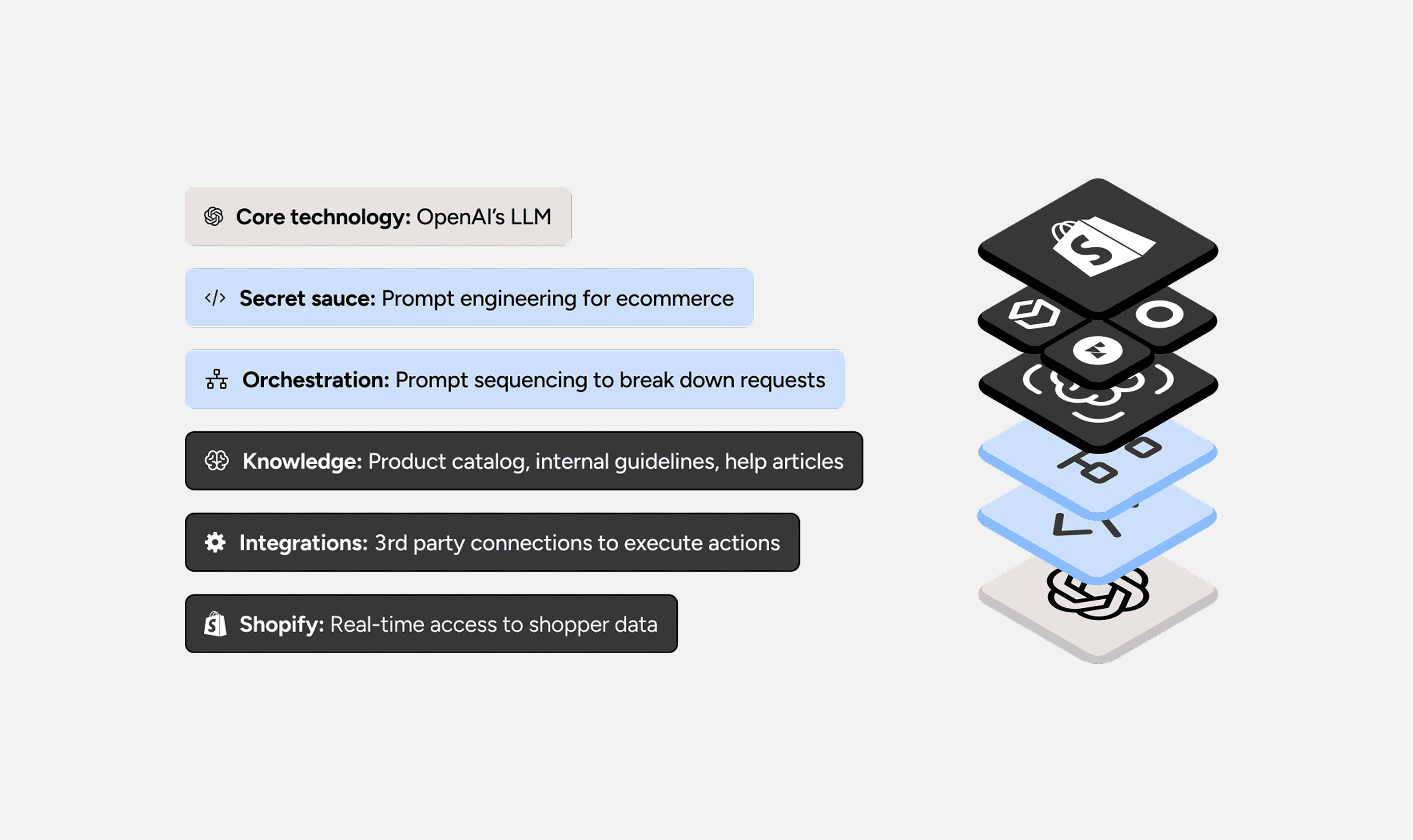
Under the hood, AI Agent runs on our existing platform, enhanced with layered intelligence and deep integrations that make every interaction smarter and more connected. This foundation powers today’s experience in chat and email, while positioning the product to evolve toward a unified, intelligent, end-to-end shopper experience.
To reduce hallucinations and build trust in AI responses, AI Agent leverages a Retrieval-Augmented Generation (RAG) layer, drawing from:
Help Center guidance and articles
Real-time Shopify order data
Internal policies and workflows
External documentation as needed
By combining these sources, AI Agent delivers contextual, reliable answers, while remaining flexible to expand into broader experiences across the Gorgias ecosystem.
Under the hood, AI Agent runs on our existing platform, enhanced with layered intelligence and deep integrations that make every interaction smarter and more connected. This foundation powers today’s experience in chat and email, while positioning the product to evolve toward a unified, intelligent, end-to-end shopper experience.
To reduce hallucinations and build trust in AI responses, AI Agent leverages a Retrieval-Augmented Generation (RAG) layer, drawing from:
Help Center guidance and articles
Real-time Shopify order data
Internal policies and workflows
External documentation as needed
By combining these sources, AI Agent delivers contextual, reliable answers, while remaining flexible to expand into broader experiences across the Gorgias ecosystem.
The Reality: Piloting a lean proof of concept
Building the full vision would have required months of engineering to restructure the backend infrastructure and introduce new UI components, which wasn’t feasible. Instead, we created a high-control, low-agency pilot: small, testable, and easy to observe, using the existing Chat infrastructure, which already has AI Agent integrated.
This allowed us to measure risk, validate the desirability of a conversational-first experience, and learn quickly without over-investing, especially since no competitor offered a similar experience at the time.
Building the full vision would have required months of engineering to restructure the backend infrastructure and introduce new UI components, which wasn’t feasible. Instead, we created a high-control, low-agency pilot: small, testable, and easy to observe, using the existing Chat infrastructure, which already has AI Agent integrated.
This allowed us to measure risk, validate the desirability of a conversational-first experience, and learn quickly without over-investing, especially since no competitor offered a similar experience at the time.
Approach
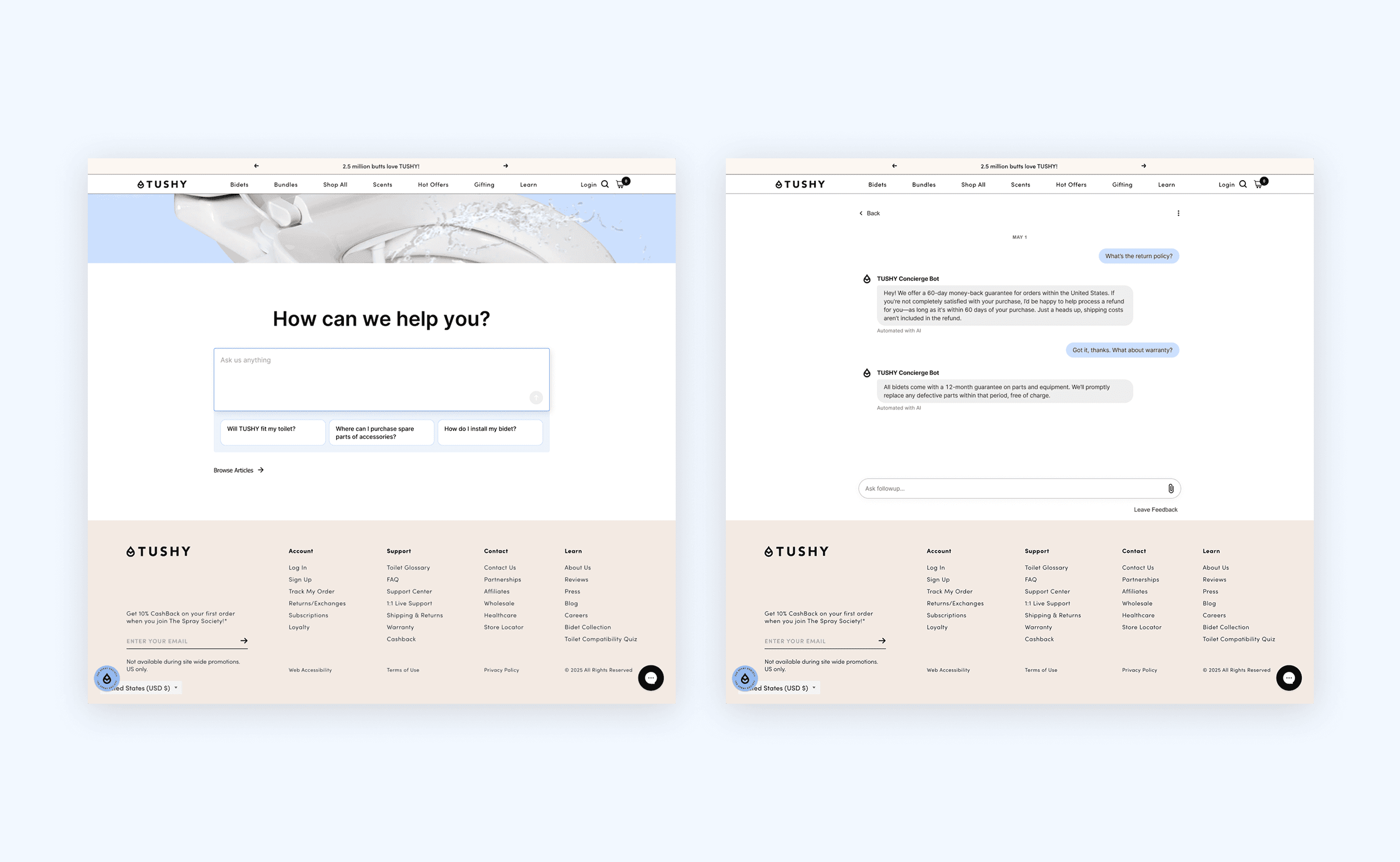
We anchored the pilot using our existing AI-powered Chat, simulating conversational support while maintaining control over AI Agent responses. This created a realistic testing environment without the cost of building a new platform. We dog-fooded participants’ existing Chats with their Help Center’s top-asked questions, ensuring it could handle most queries.
The pilot included:
• A/B test: Ran for 1 month, comparing the existing Help Center to the conversational version. Measured shopper engagement, resolution rates, and drop-off behavior
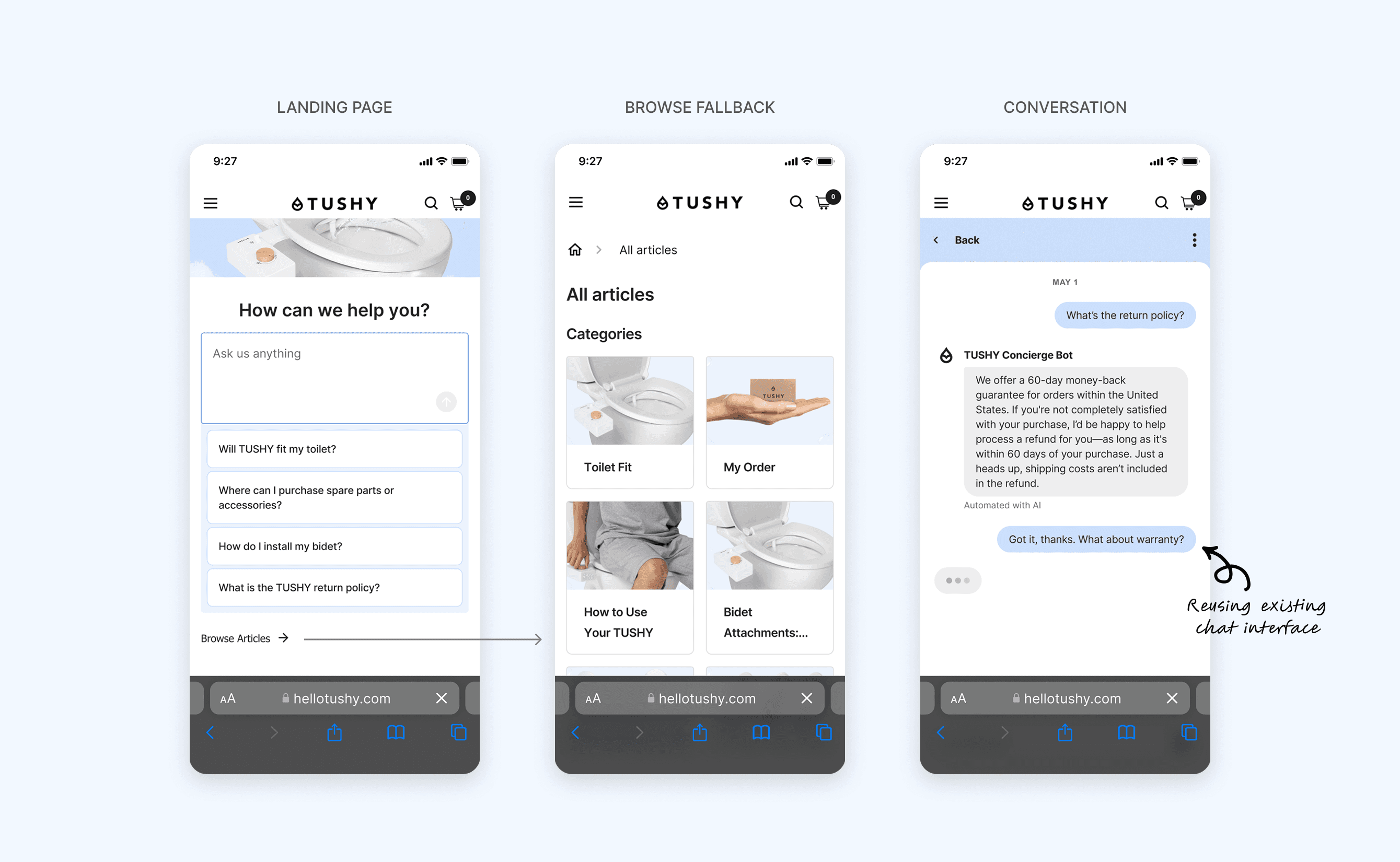
• UI tweaks: Reused the Chat interface while toning down the “chat” look so shoppers perceived it as self-serve rather than live support
• Fallback browsing: Instead of hiding articles completely, we tucked them behind a simple text button, allowing us to observe whether shoppers preferred the old browsing path or used it as a backup to AI
• Fixed prompt suggestions: Merchants defined a short set of common starter questions. While not dynamically generated, this allowed us to observe baseline engagement
Approach
We anchored the pilot using our existing AI-powered Chat, simulating conversational support while maintaining control over AI Agent responses. This created a realistic testing environment without the cost of building a new platform. We dog-fooded participants’ existing Chats with their Help Center’s top-asked questions, ensuring it could handle most queries.
The pilot included:
• A/B test: Ran for 1 month, comparing the existing Help Center to the conversational version. Measured shopper engagement, resolution rates, and drop-off behavior
• UI tweaks: Reused the Chat interface while toning down the “chat” look so shoppers perceived it as self-serve rather than live support
• Fallback browsing: Instead of hiding articles completely, we tucked them behind a simple text button, allowing us to observe whether shoppers preferred the old browsing path or used it as a backup to AI
• Fixed prompt suggestions: Merchants defined a short set of common starter questions. While not dynamically generated, this allowed us to observe baseline engagement
Approach
We anchored the pilot using our existing AI-powered Chat, simulating conversational support while maintaining control over AI Agent responses. This created a realistic testing environment without the cost of building a new platform. We dog-fooded participants’ existing Chats with their Help Center’s top-asked questions, ensuring it could handle most queries.
The pilot included:
• A/B test: Ran for 1 month, comparing the existing Help Center to the conversational version. Measured shopper engagement, resolution rates, and drop-off behavior
• UI tweaks: Reused the Chat interface while toning down the “chat” look so shoppers perceived it as self-serve rather than live support
• Fallback browsing: Instead of hiding articles completely, we tucked them behind a simple text button, allowing us to observe whether shoppers preferred the old browsing path or used it as a backup to AI
• Fixed prompt suggestions: Merchants defined a short set of common starter questions. While not dynamically generated, this allowed us to observe baseline engagement
Learnings & Impact
As a result of the pilot, an MVP was planned for release in H2. While I left Gorgias shortly after, the new infrastructure and UI were designed to support conversational AI experiences across the product, backed by new design system components tailored for this interaction pattern.
Impact of vision work
Long-Term Thinking: Establishing a future-facing vision demonstrated to stakeholders that design was contributing strategically, not just incrementally.
Alignment Tool: By framing discussions around the end-to-end shopper experience, we helped leadership make informed decisions about pilot scope and product-market fit. This also highlighted opportunities for design to lead strategy, which hadn’t been formally emphasized before due to time constraints.
Changes in shopper behavior
Early testing revealed meaningful shifts in behavior:
Shoppers began entering longer, natural-language questions instead of short keyword searches
This led to fewer drop-offs and higher resolution rates
Merchants acknowledged potential cost implications but were supportive of optional automated interactions in their Help Centers
As a result of the pilot, an MVP was planned for release in H2. While I left Gorgias shortly after, the new infrastructure and UI were designed to support conversational AI experiences across the product, backed by new design system components tailored for this interaction pattern.
Impact of vision work
Long-Term Thinking: Establishing a future-facing vision demonstrated to stakeholders that design was contributing strategically, not just incrementally.
Alignment Tool: By framing discussions around the end-to-end shopper experience, we helped leadership make informed decisions about pilot scope and product-market fit. This also highlighted opportunities for design to lead strategy, which hadn’t been formally emphasized before due to time constraints.
Changes in shopper behavior
Early testing revealed meaningful shifts in behavior:
Shoppers began entering longer, natural-language questions instead of short keyword searches
This led to fewer drop-offs and higher resolution rates
Merchants acknowledged potential cost implications but were supportive of optional automated interactions in their Help Centers
As a result of the pilot, an MVP was planned for release in H2. While I left Gorgias shortly after, the new infrastructure and UI were designed to support conversational AI experiences across the product, backed by new design system components tailored for this interaction pattern.
Impact of vision work
Long-Term Thinking: Establishing a future-facing vision demonstrated to stakeholders that design was contributing strategically, not just incrementally.
Alignment Tool: By framing discussions around the end-to-end shopper experience, we helped leadership make informed decisions about pilot scope and product-market fit. This also highlighted opportunities for design to lead strategy, which hadn’t been formally emphasized before due to time constraints.
Changes in shopper behavior
Early testing revealed meaningful shifts in behavior:
Shoppers began entering longer, natural-language questions instead of short keyword searches
This led to fewer drop-offs and higher resolution rates
Merchants acknowledged potential cost implications but were supportive of optional automated interactions in their Help Centers
How we used AI-powered prompts to double chat engagement and drive a 22% increase in GMV.
How we used AI-powered prompts to double chat engagement and drive a 22% increase in GMV.
How we used AI-powered prompts to double chat engagement and drive a 22% increase in GMV.
The engine powering AI Agent
Under the hood, AI Agent runs on our existing platform, enhanced with layered intelligence and deep integrations that make every interaction smarter and more connected. This foundation powers today’s experience in chat and email, while positioning the product to evolve toward a unified, intelligent, end-to-end shopper experience.
To reduce hallucinations and build trust in AI responses, AI Agent leverages a Retrieval-Augmented Generation (RAG) layer, drawing from:
Help Center guidance and articles
Real-time Shopify order data
Internal policies and workflows
External documentation as needed
By combining these sources, AI Agent delivers contextual, reliable answers, while remaining flexible to expand into broader experiences across the Gorgias ecosystem.