SHOPPING ASSISTANT / GORGIAS • 2025
Suggested Product Questions
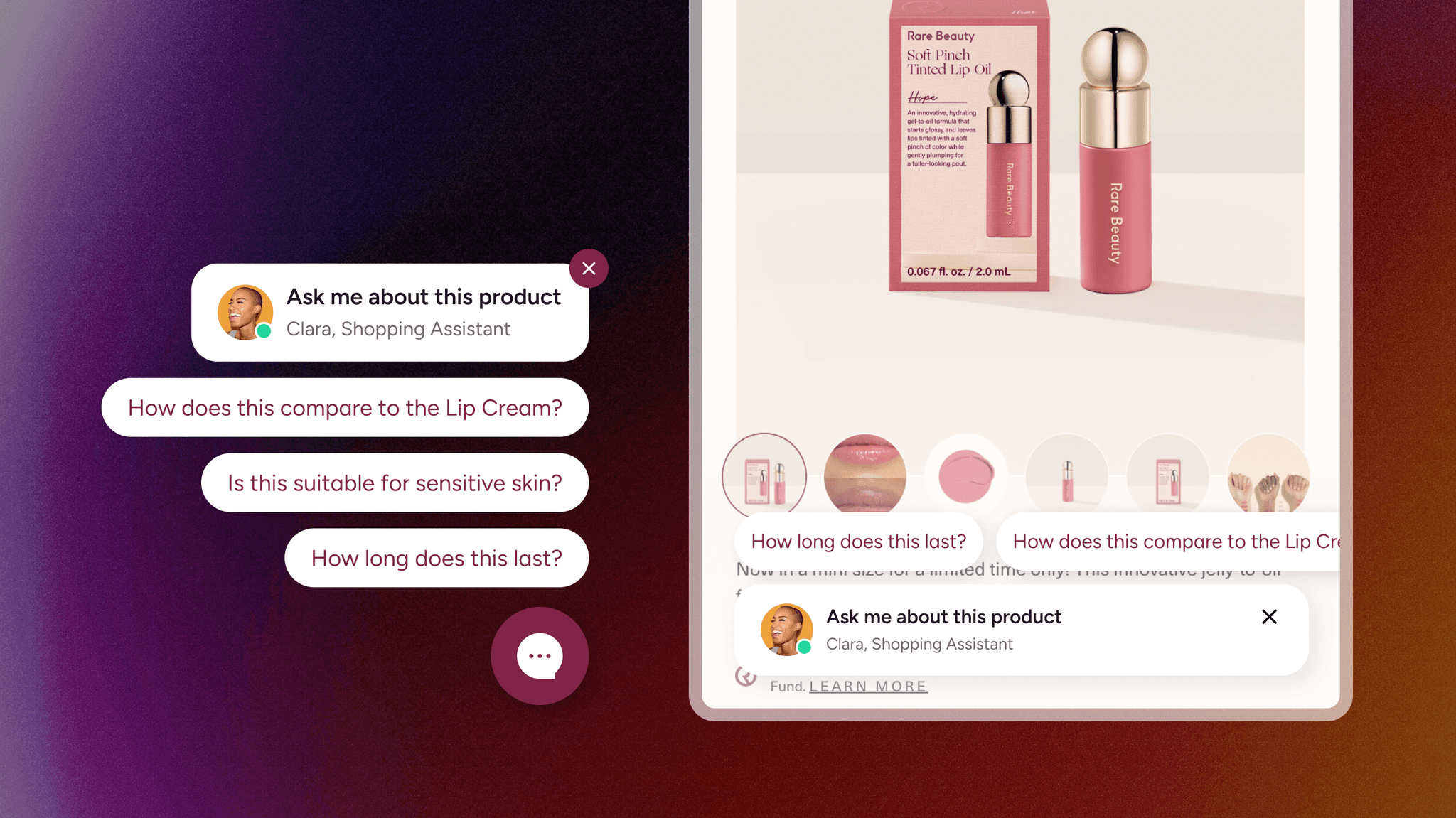
This project highlights balancing speed, existing constraints, and cross-team collaboration to deliver impactful results.
ROLE
Product Designer
TIMELINE
February 2025
COLLABORATORS
Felipe M., Product Manager
Layla D., Product Designer
2 Engineers
Machine Learning Team
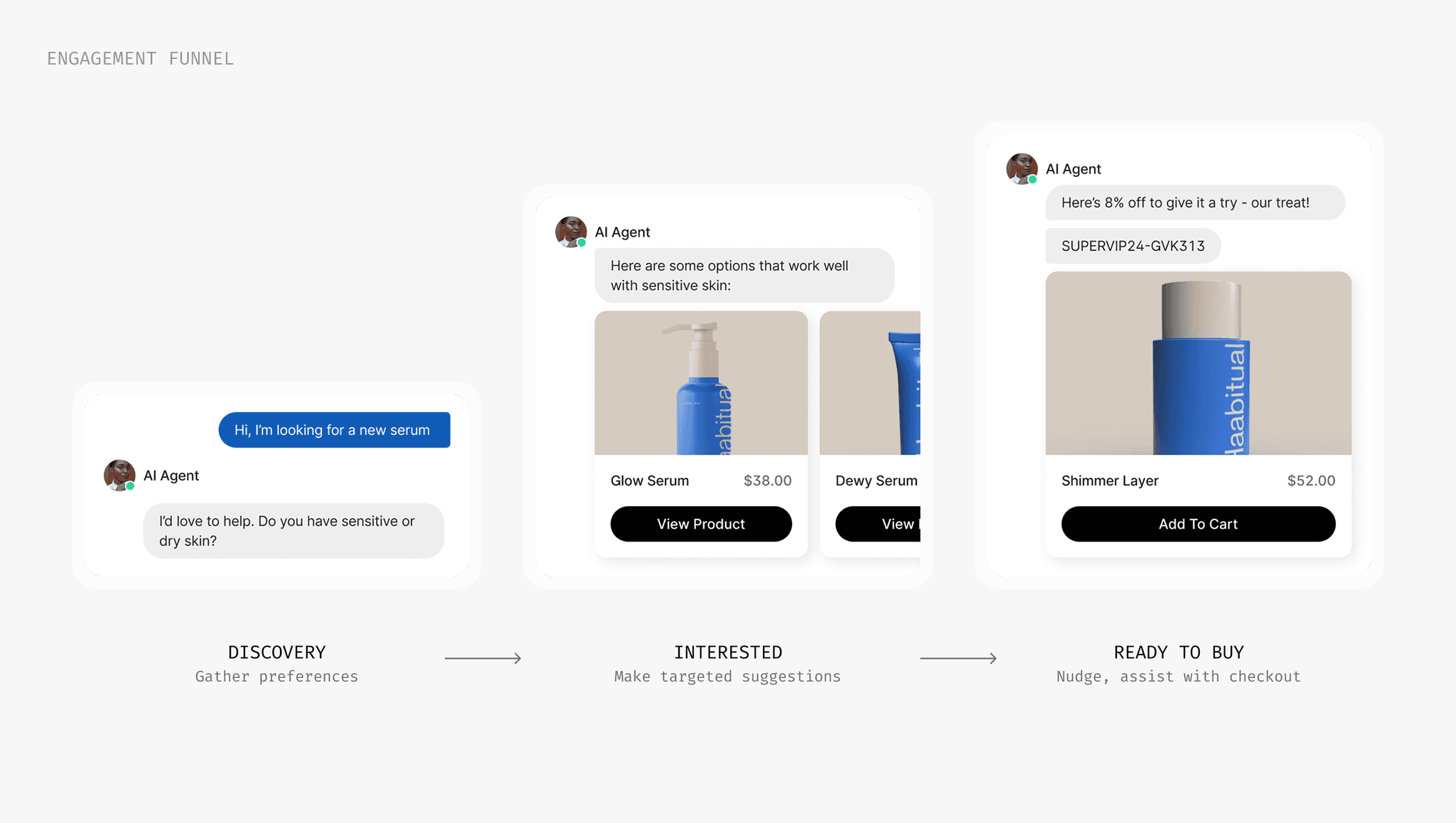
Shopping Assistant is an AI Agent that engages every shopper like your best in-store rep…only smarter, faster, and available 24/7.
Using browsing behavior and buying intent, it personalizes real-time interactions to move shoppers from discovery to checkout.
THE PROBLEM
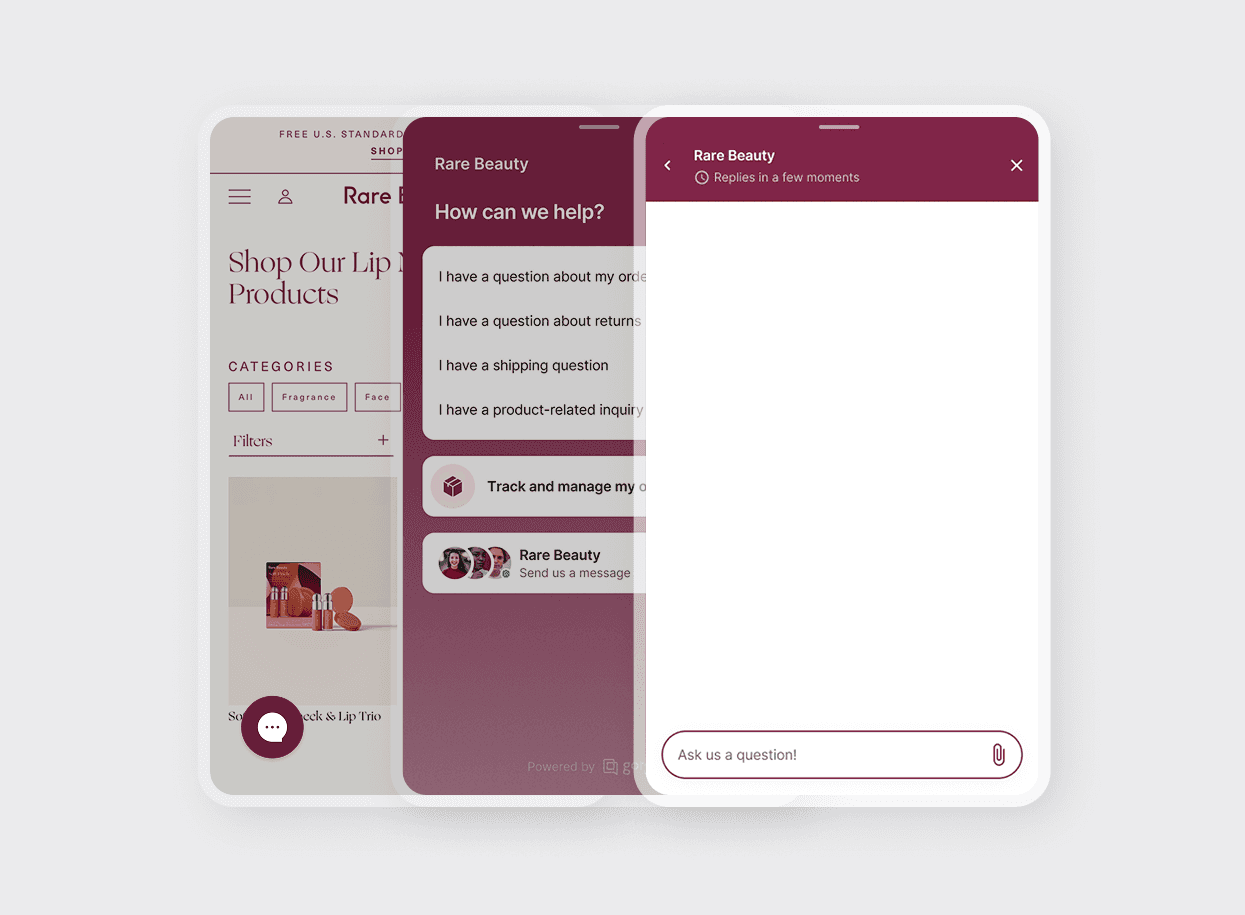
In practice, however, its impact is limited by an engagement problem. Only 5% of all chat interactions are funneled through the assistant.
And without engagement, even the smartest recommendations and checkout nudges can't influence purchasing decisions.
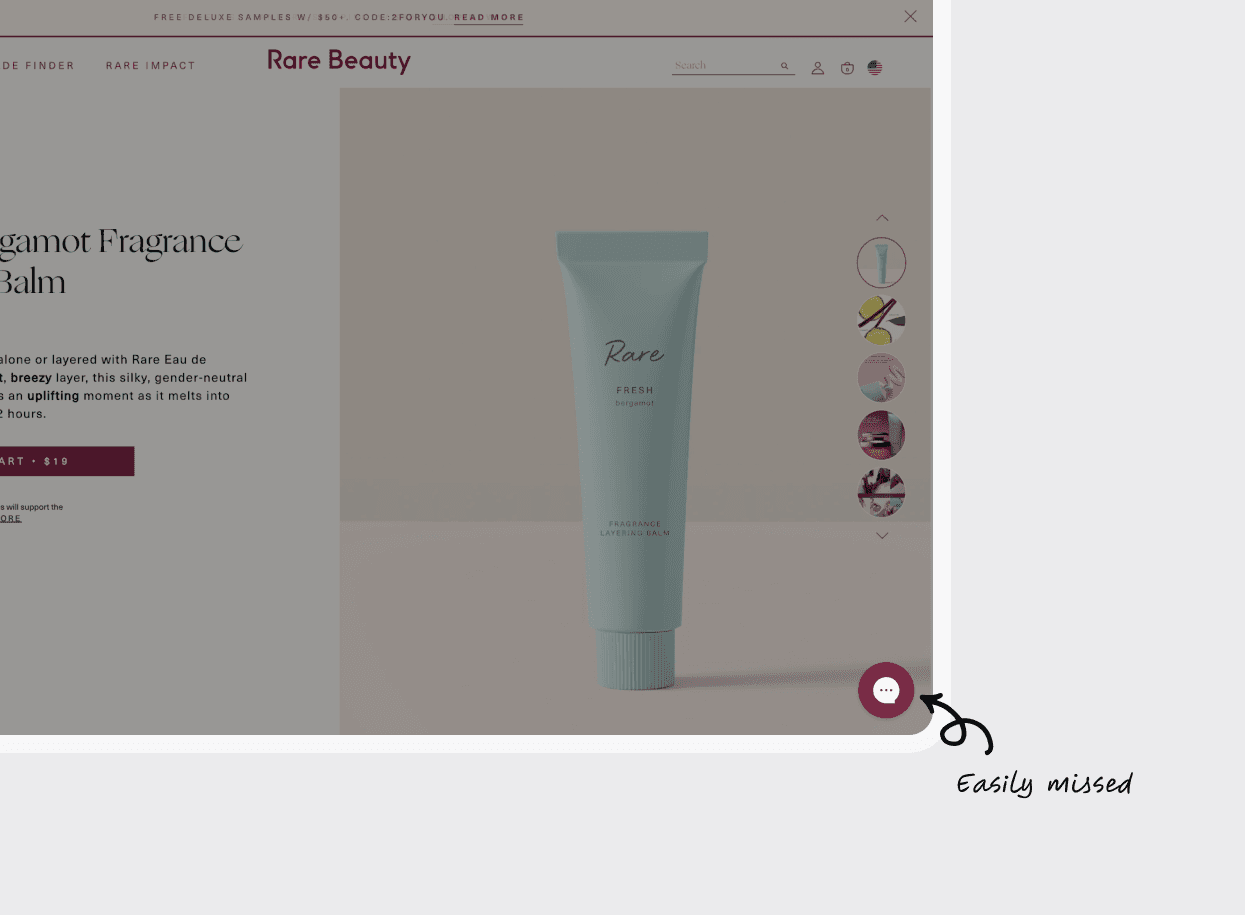
It's hidden and passive
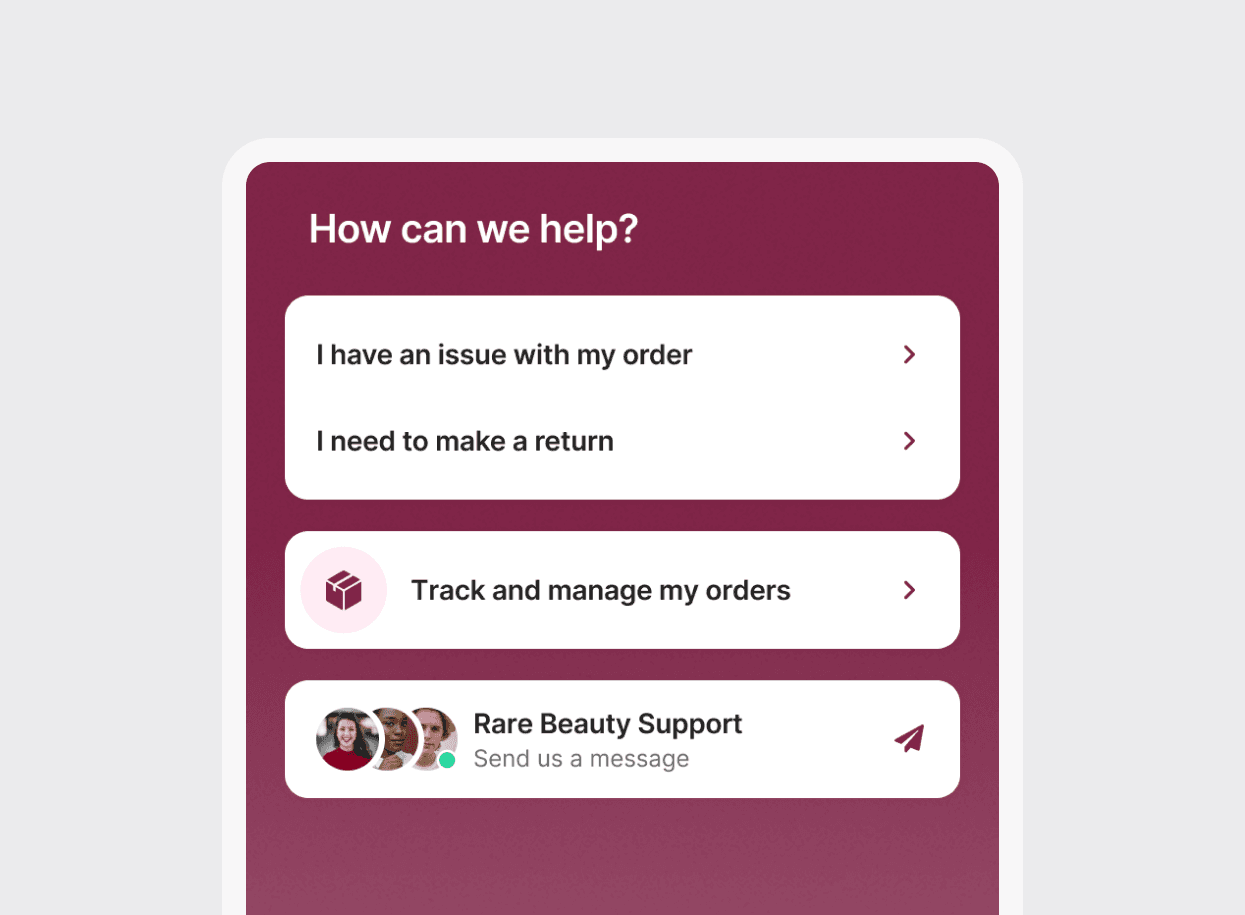
Shopping Assistant is tucked away in the chat widget, competing with product-related content that's far more visually engaging and relevant.
THE SOLUTION
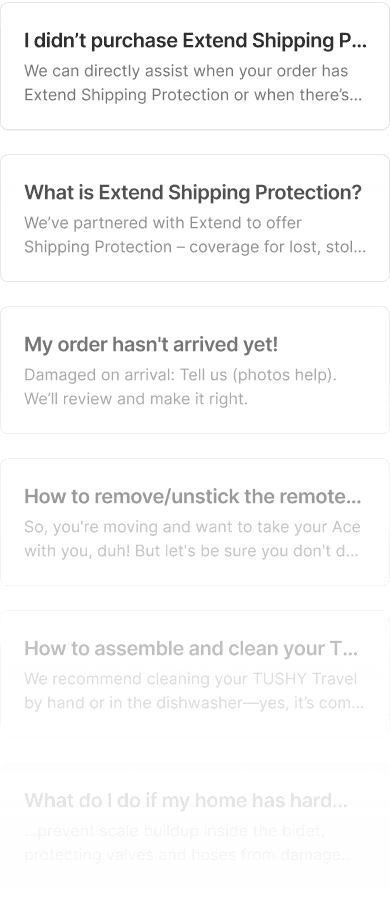
Introducing Suggested product questions: Smart, contextual prompts that turn hesitation into purchases.
Timely and highly relevant
Product-specific prompts appear on product detail pages (PDPs) after a brief delay—right when shoppers hesitate between leaving and adding the item to their cart.
Intent-aware engagement
After answering, Shopping Assistant detects intent and nudges shoppers towards the next appropriate stage.
Persistent, not pushy
If shoppers dismiss prompts while browsing, they won't appear again until the chat is opened manually.
One-click configuration
Turning on the feature requires just a single toggle in merchant settings. We do the rest.
Optimized across devices
Two configurations ensure prompts feel natural on mobile and web without being too intrusive.
THE FOUNDATION
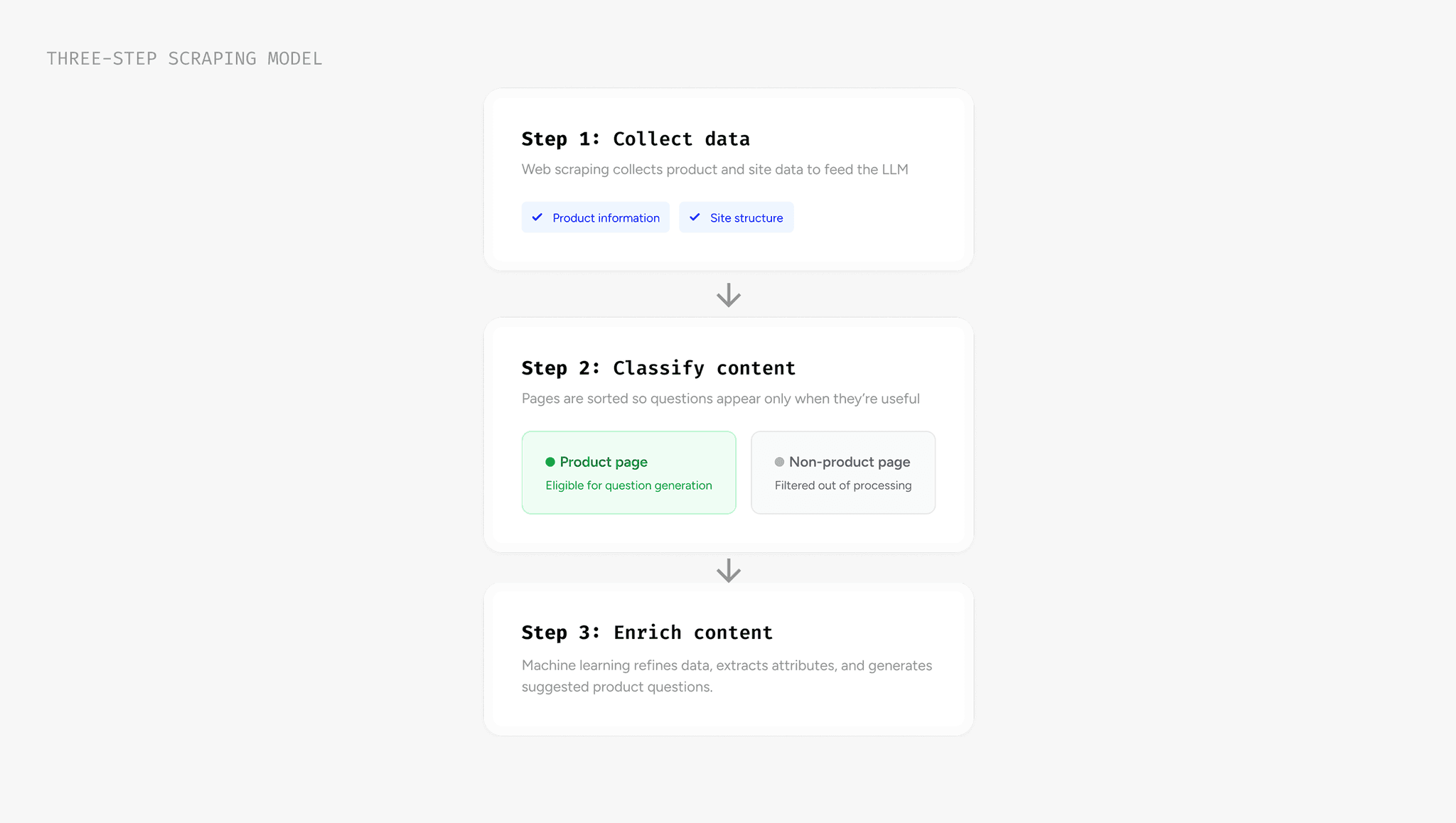
A scraping system we built turns websites into AI knowledge that power question generation.
We partnered with Machine Learning to build a model that extracts product info from merchant websites. It was our first experiment using a scraping method, which later became it's own standalone feature.
RESULTS
This feature was released to all customers in June 2025.
Early beta test results showed measurable impact on engagement and revenue:
2x increase
in chat engagement
22% increase
in GMV generated
30% chat volume
redirected to AI
FUTURE ITERATIONS
The Vision: Blending shopper signals with data
While the MVP uses product data to generate prompts, the vision is to blend past shopper behavior, purchase history, and engagement trends across the platform to make the experience feel truly tailored to each individual shopper.
BUILDING ON PROVEN PATTERNS
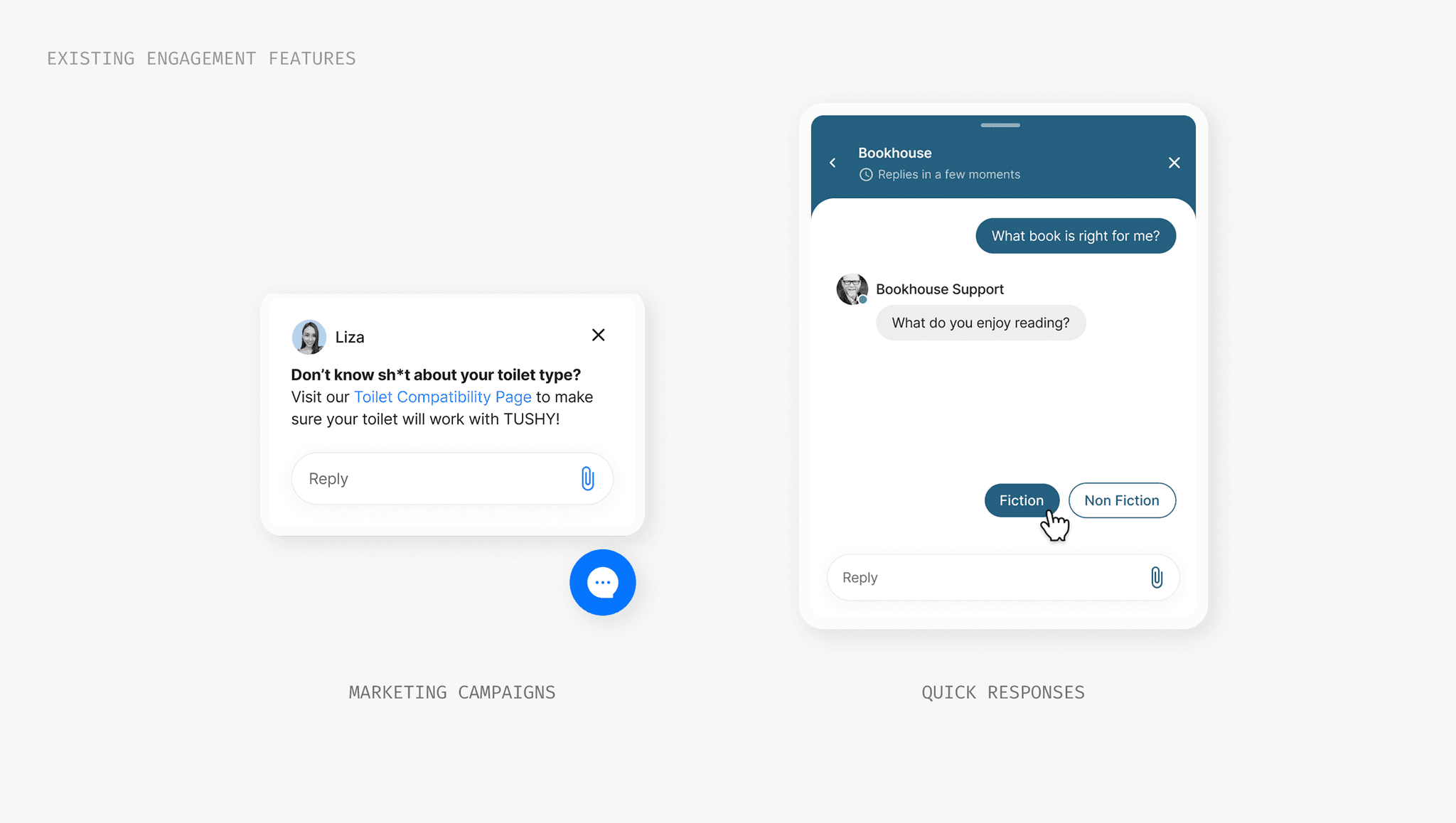
We knew proactive engagement works when timed right, and believed it could work at the moment of decision.
Existing features proved that well-timed prompts drive engagement and conversions. The same principle could work on product pages, where interest meets uncertainty and shoppers often leave without buying.
ALIGNING FAST
Examining prompt placement: embedding vs. floating pills
With a short turnaround, we explored common engagement patterns we'd seen from research: embedding questions directly in the page content or displaying them as floating pills outside the chat after a few seconds of lingering.
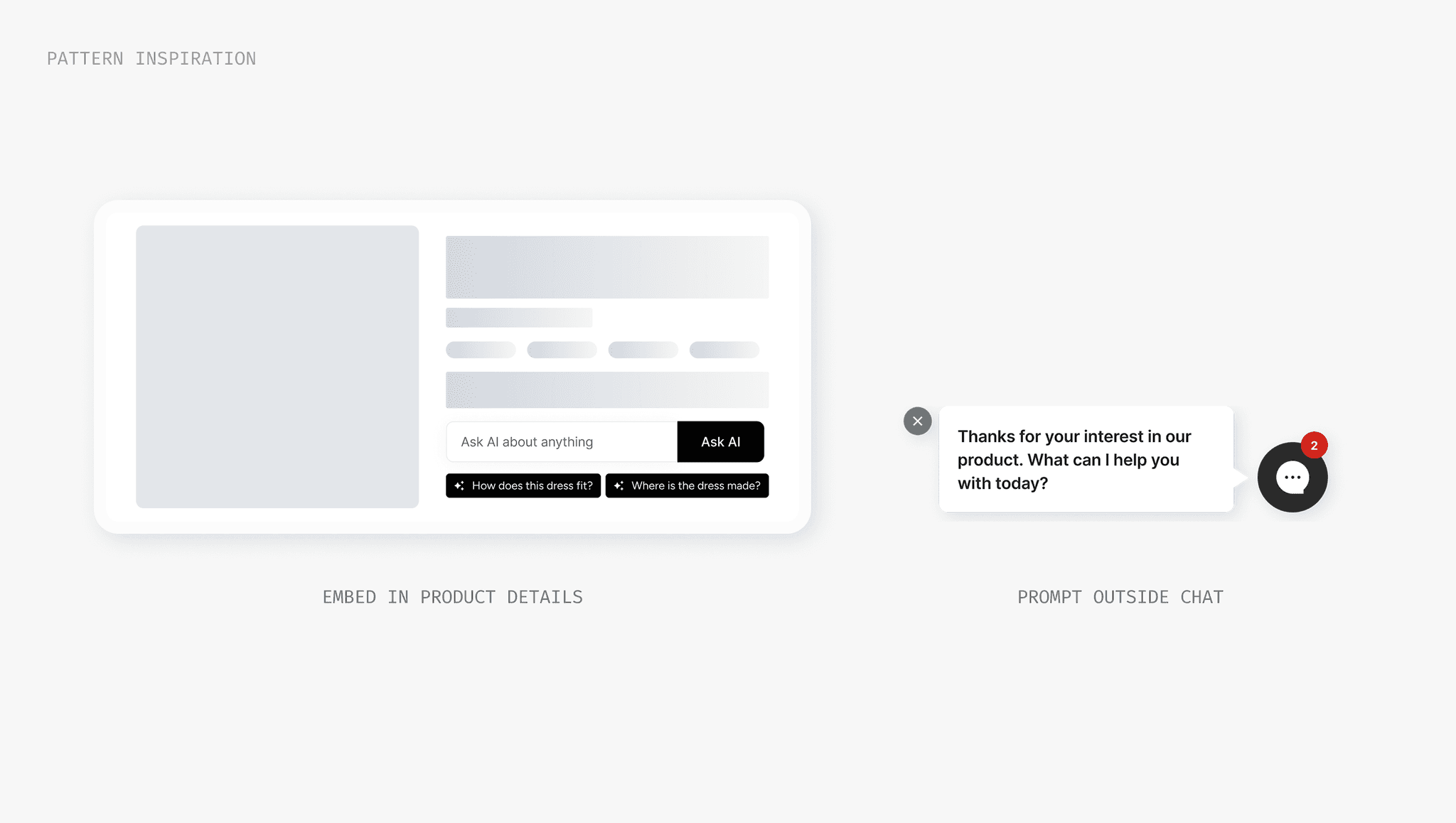
We aligned on the latter for practical reasons:
It works everywhere
Pills would work across any store setup without limitations— headless, custom themes, or standard installs.
Fewer configuration hurdles
Embedding requires more custom configuration to match each product page style.
and hypothesized it would perform better, despite concerns about banner blindness:
Faster adoption
Pills would require minimal integration and fewer styling adjustments (just color and font to start).
Higher visibility
They're more visually prominent on the interface, making them harder to miss and more likely to drive engagement.
EXPLORATION & ITERATION
Visual design, merchant controls, and accessible overlays
This project had two designers on it at tandem — myself and a senior designer. Before off-boarding due to a reorg, she explored some visual approaches before I moved forward as the design lead.
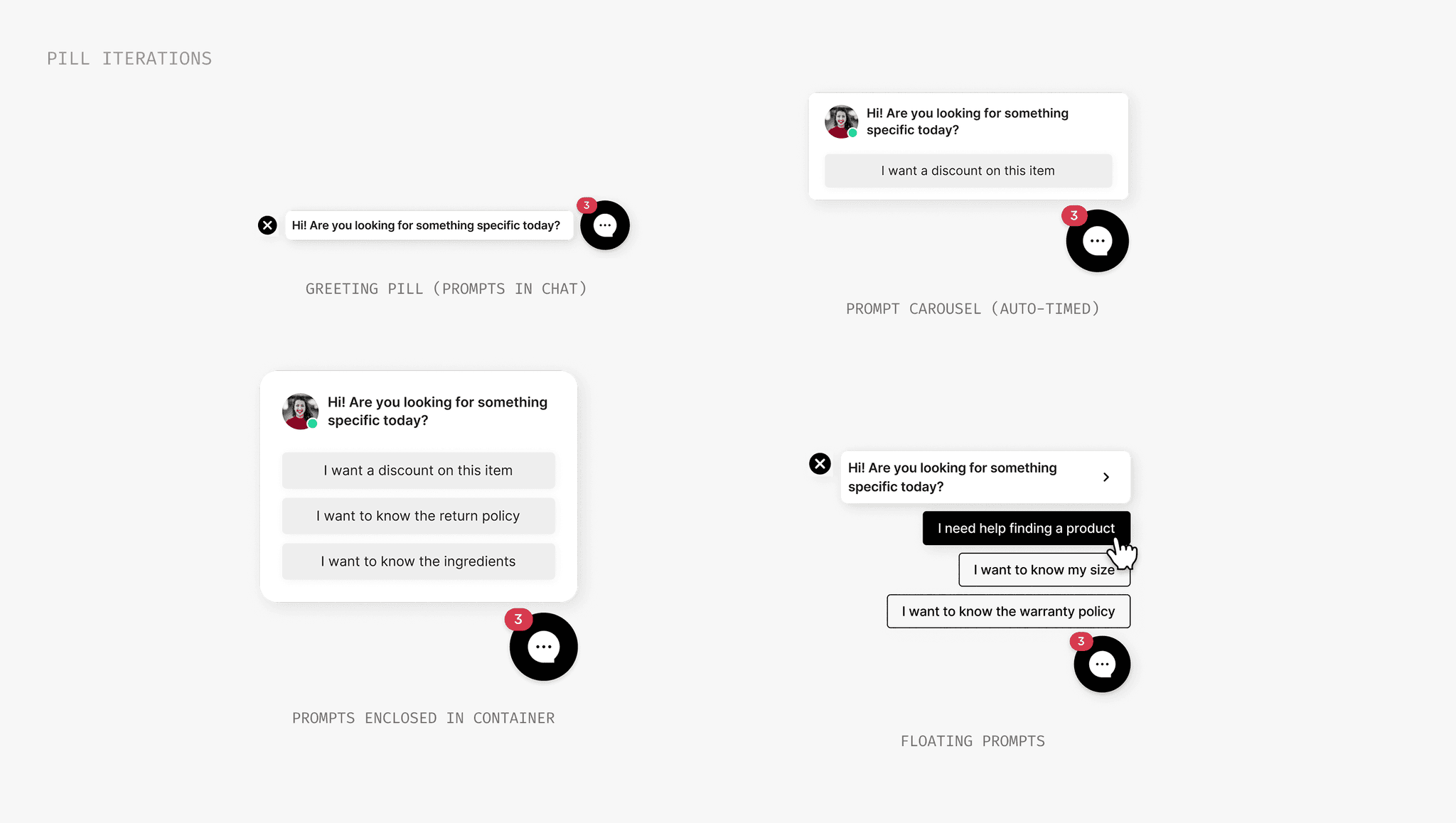
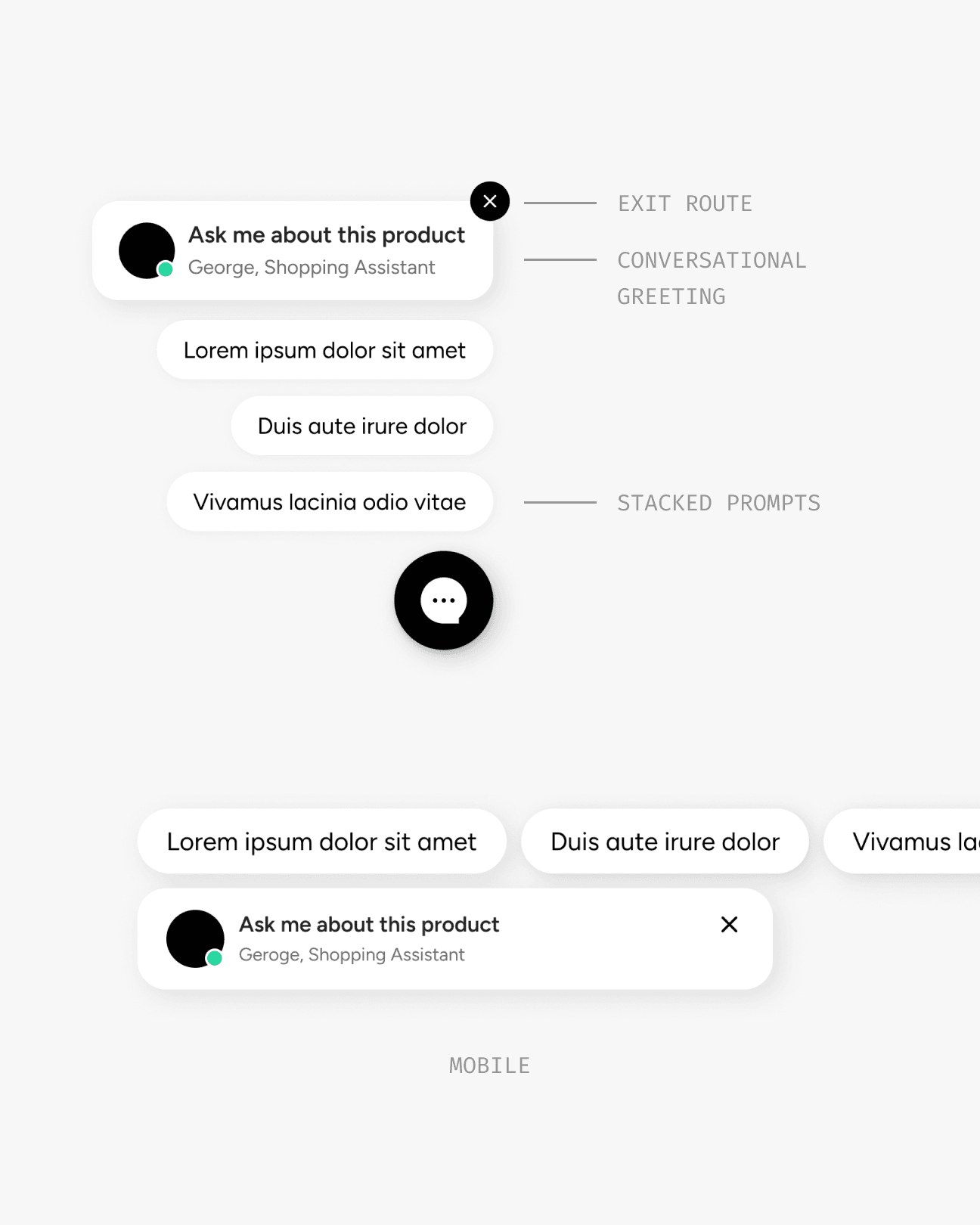
Optimized for access, space, and adaptability
The final design balances low friction to engage, minimal page footprint, and flexible mobile adaptation.
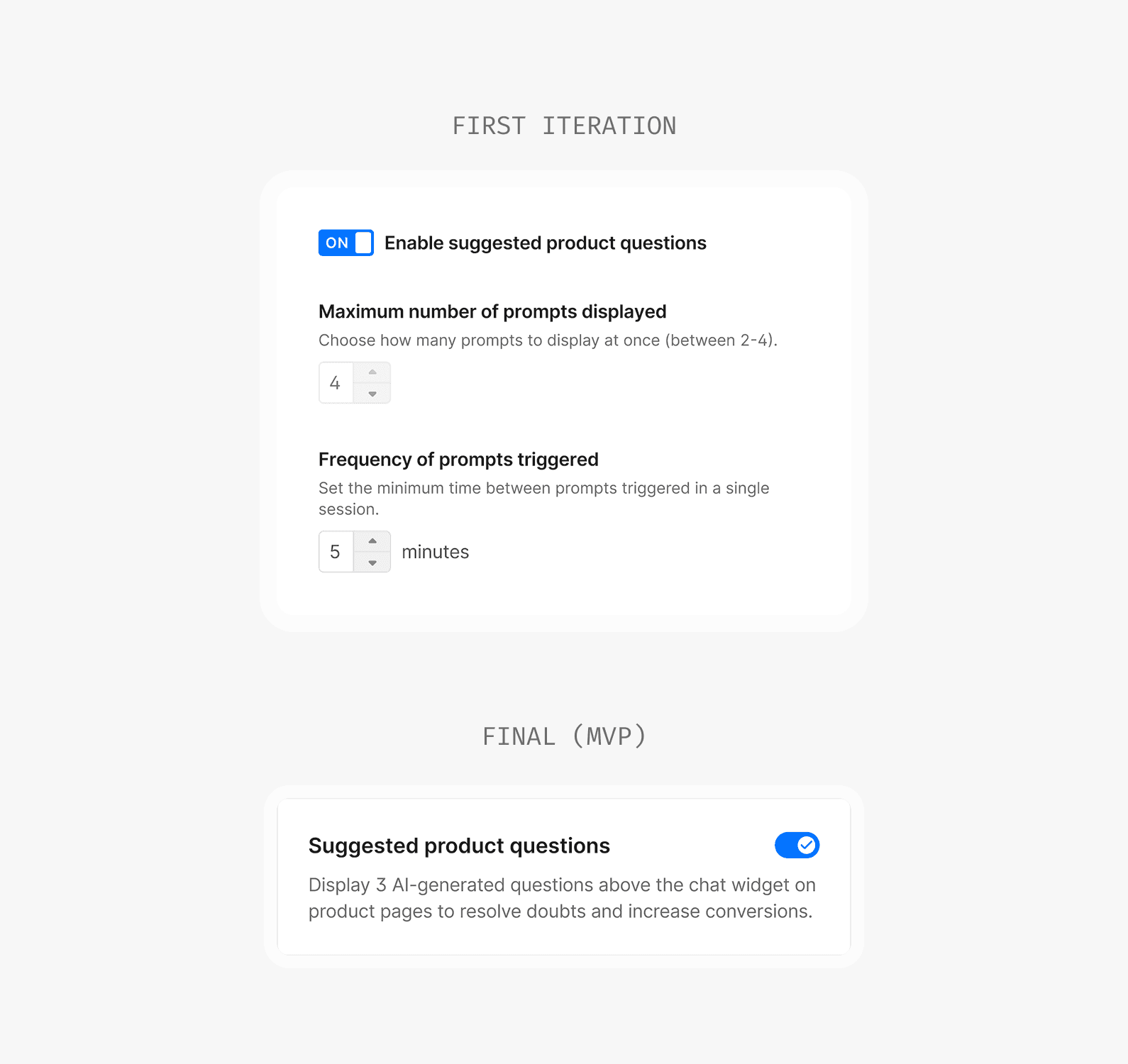
Simplicity over flexibility
Early explorations of the settings gave merchants extensive control. We scaled back to prevent over-configuration.
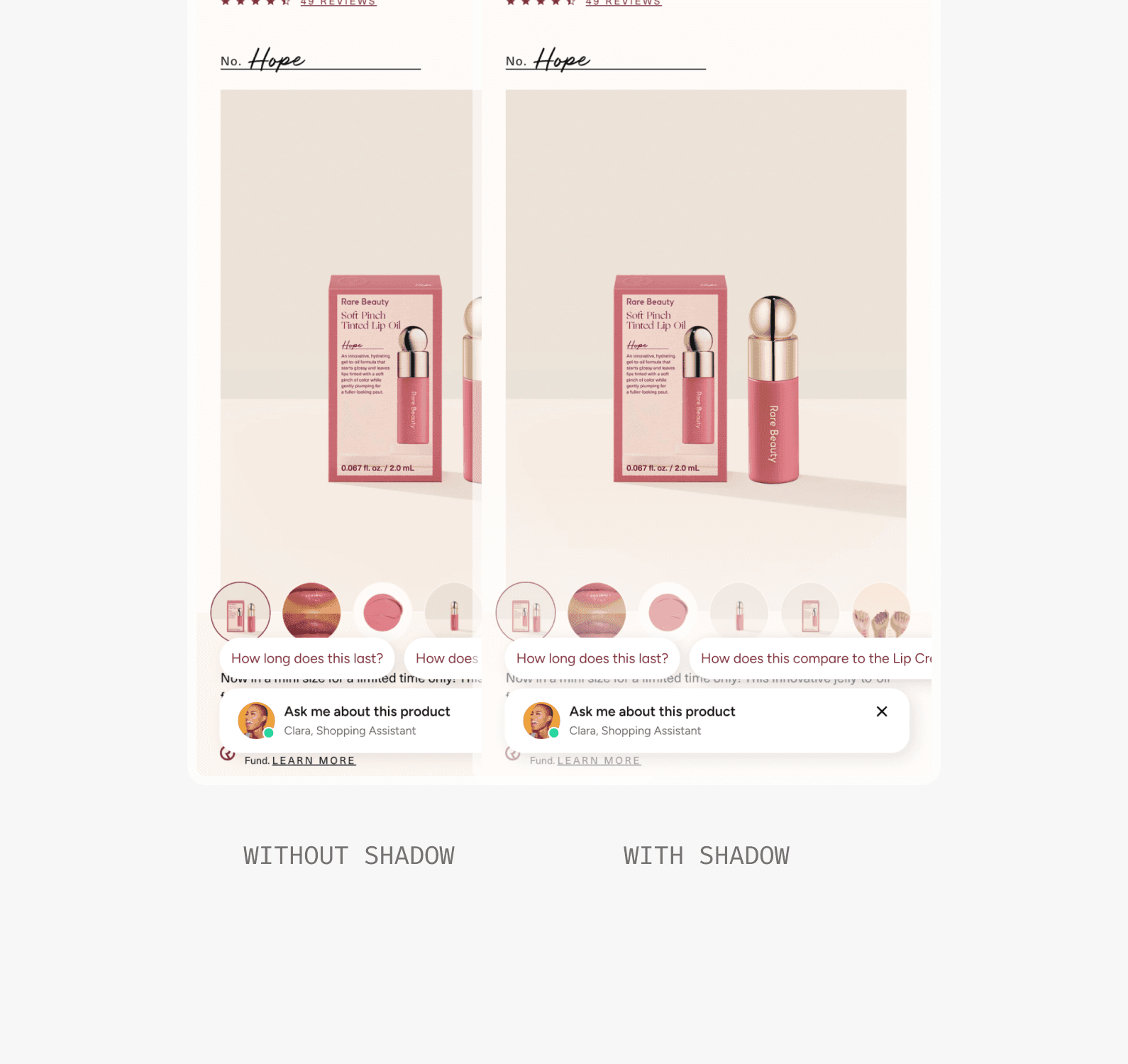
Adding depth to improve contrast
I added a subtle white shadow to improve readability of prompts across varying page backgrounds.
SYSTEM CONSIDERATIONS
Working around existing functionality and edge cases
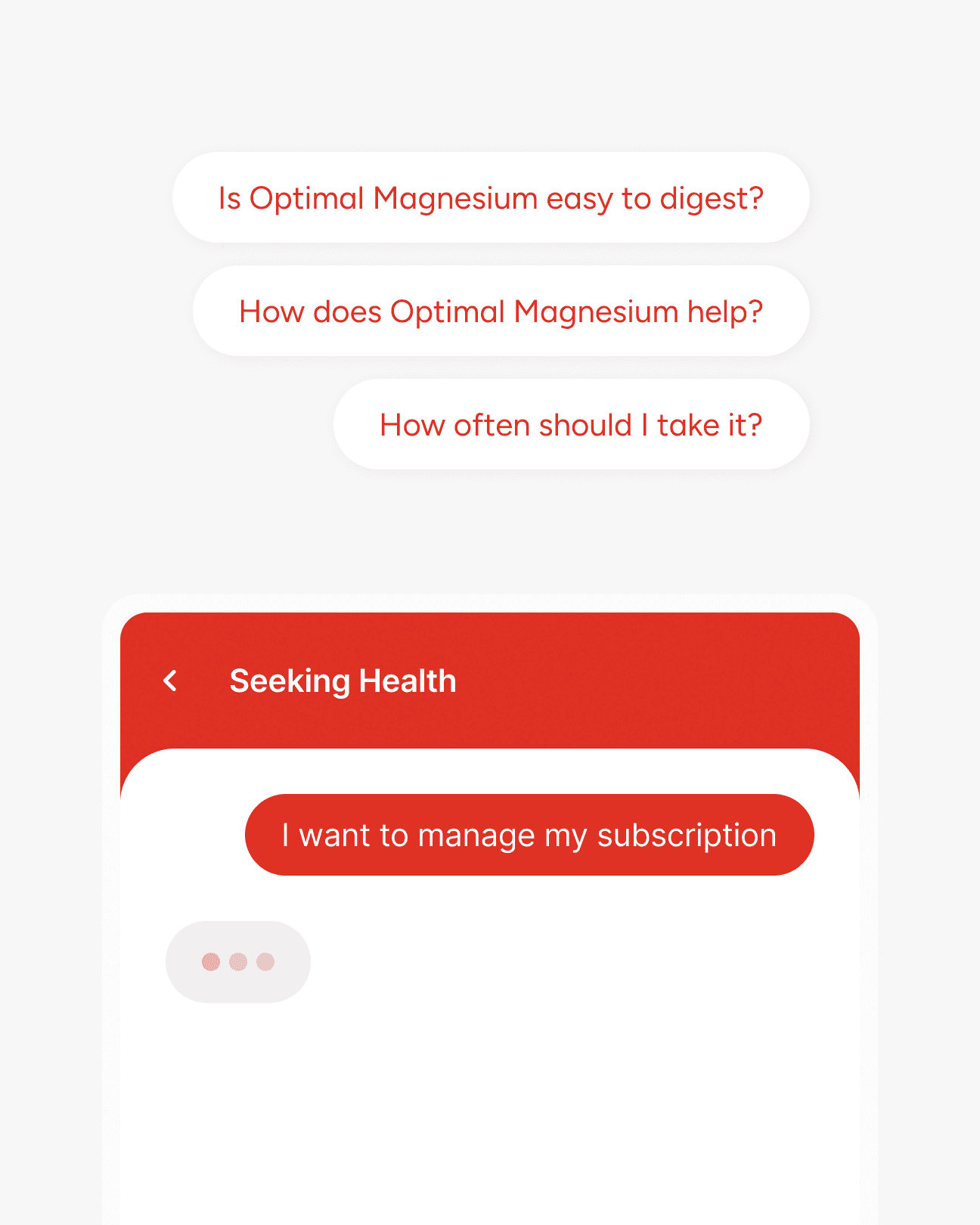
Branding
Pills use existing chat colors to eliminate configuration work.
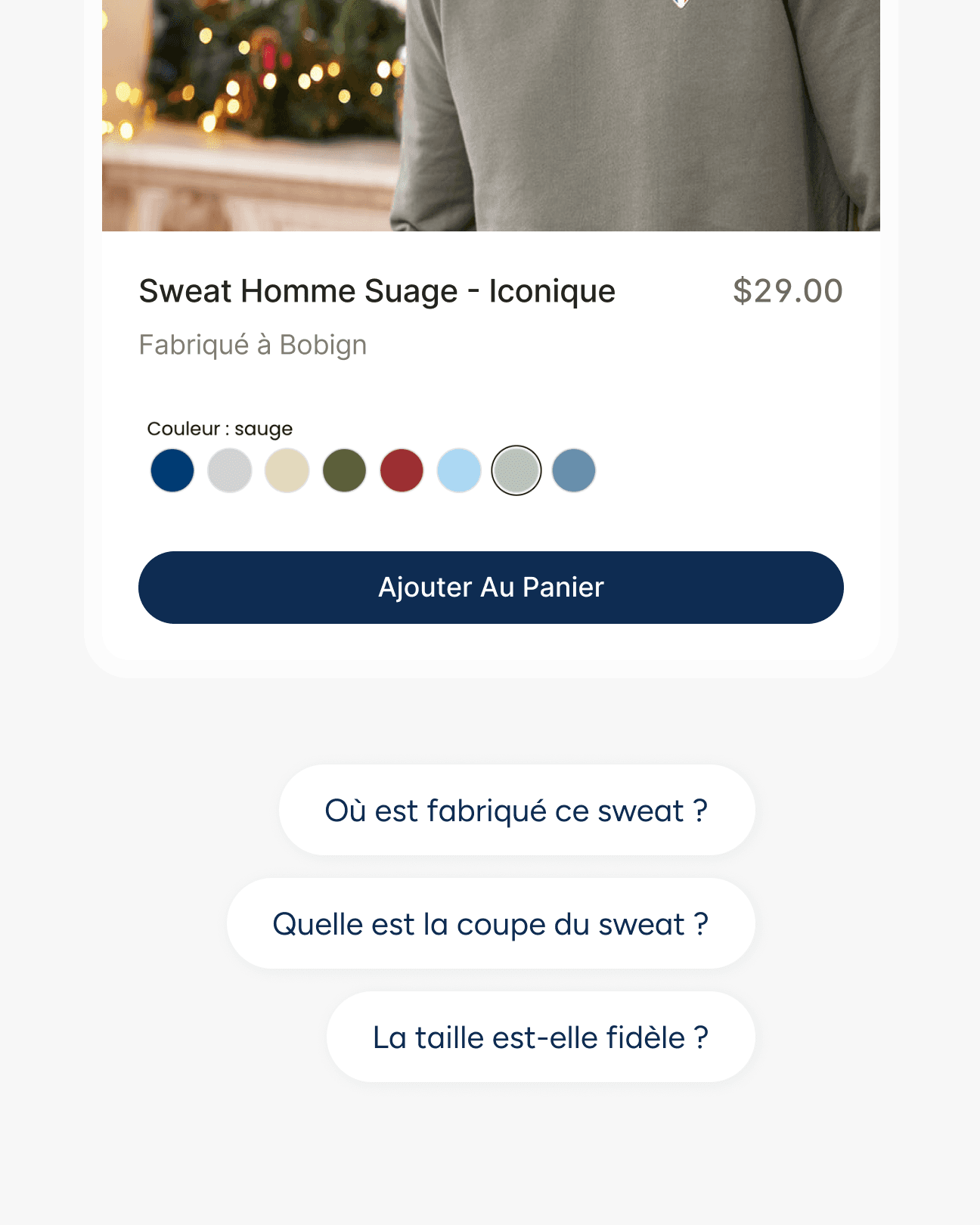
Language
We compare page language to chat language, only showing prompts when they both match.
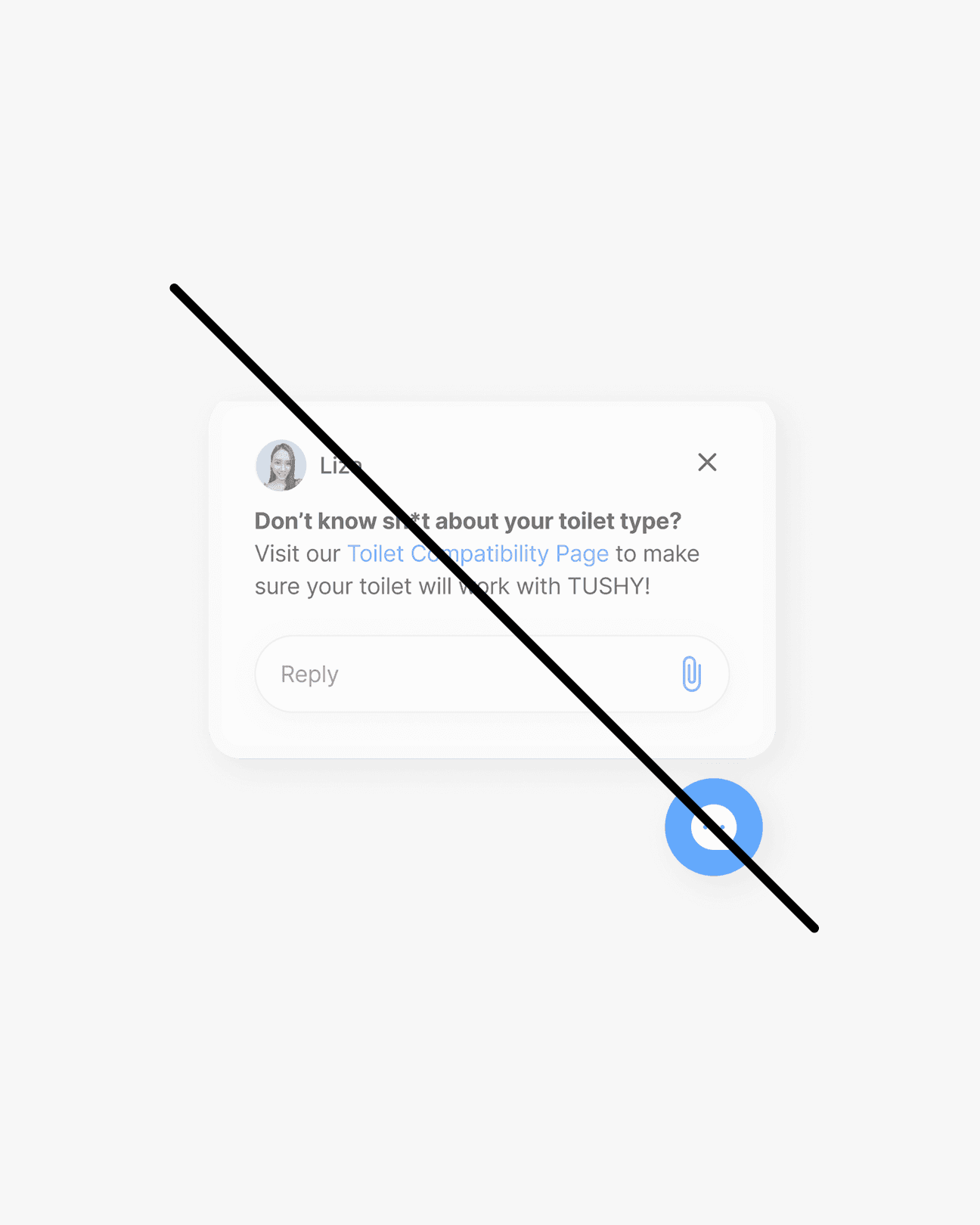
Feature conflict
When prompts and Campaigns are assigned to the same page, prompts take priority.
TESTING
We ran a beta to assess prompt quality, which required real data.
While it drove significant engagement and GMV gains, it also revealed key insights:
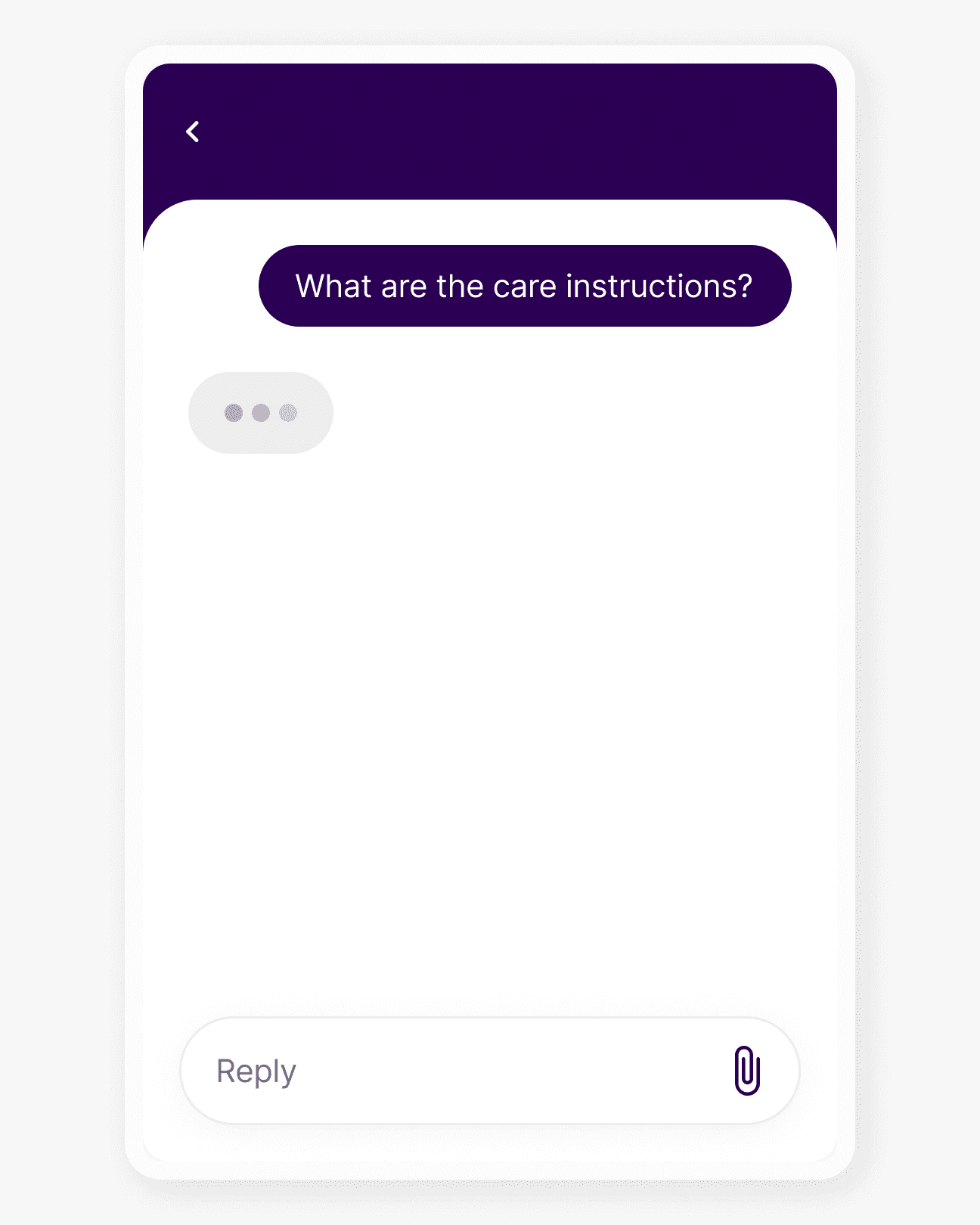
Speed kills engagement
High latency in responses caused shoppers to abandon conversations after the first interaction.
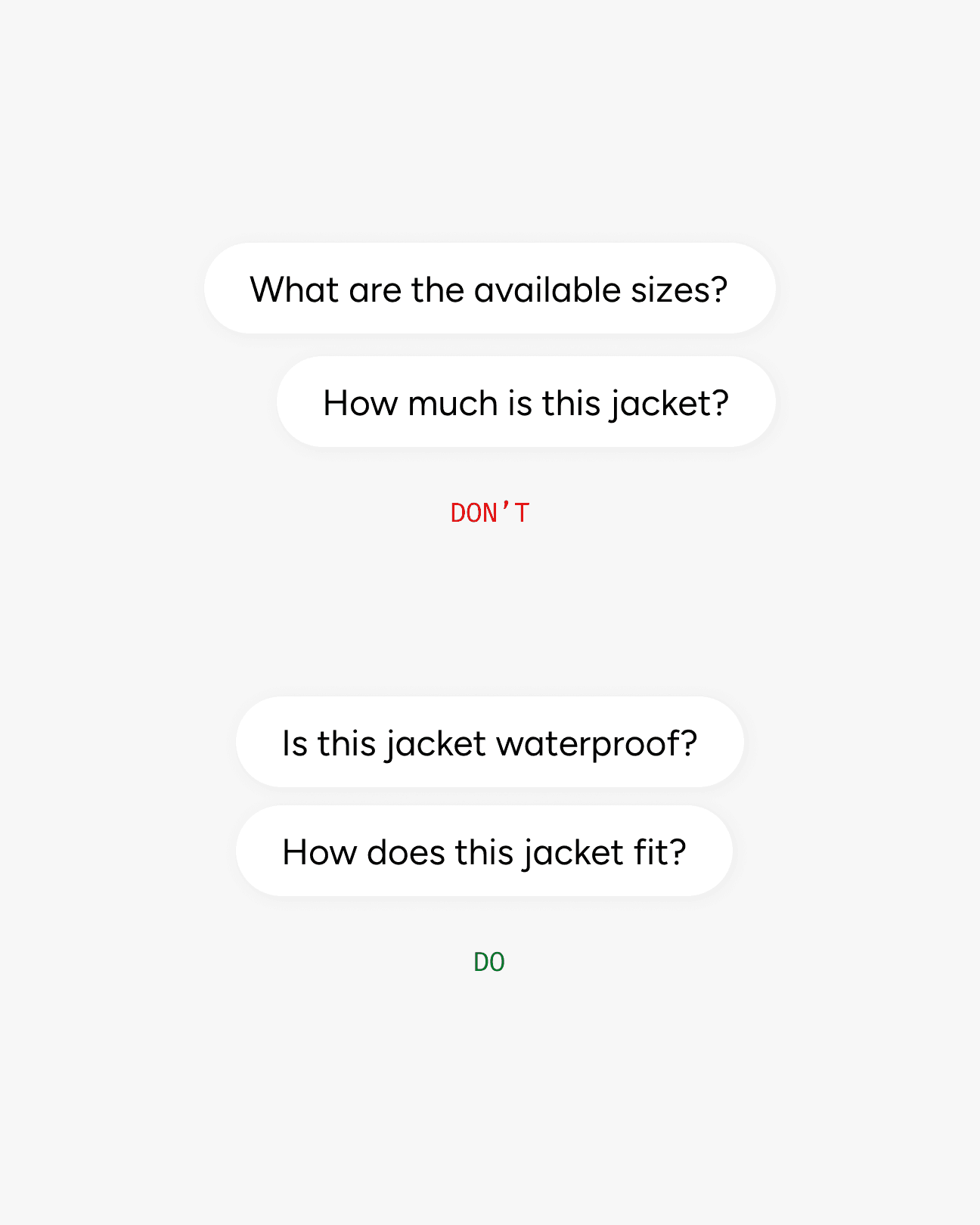
Quality drives clicks
Prompts should only surface non-obvious product details (ingredients, material, care).
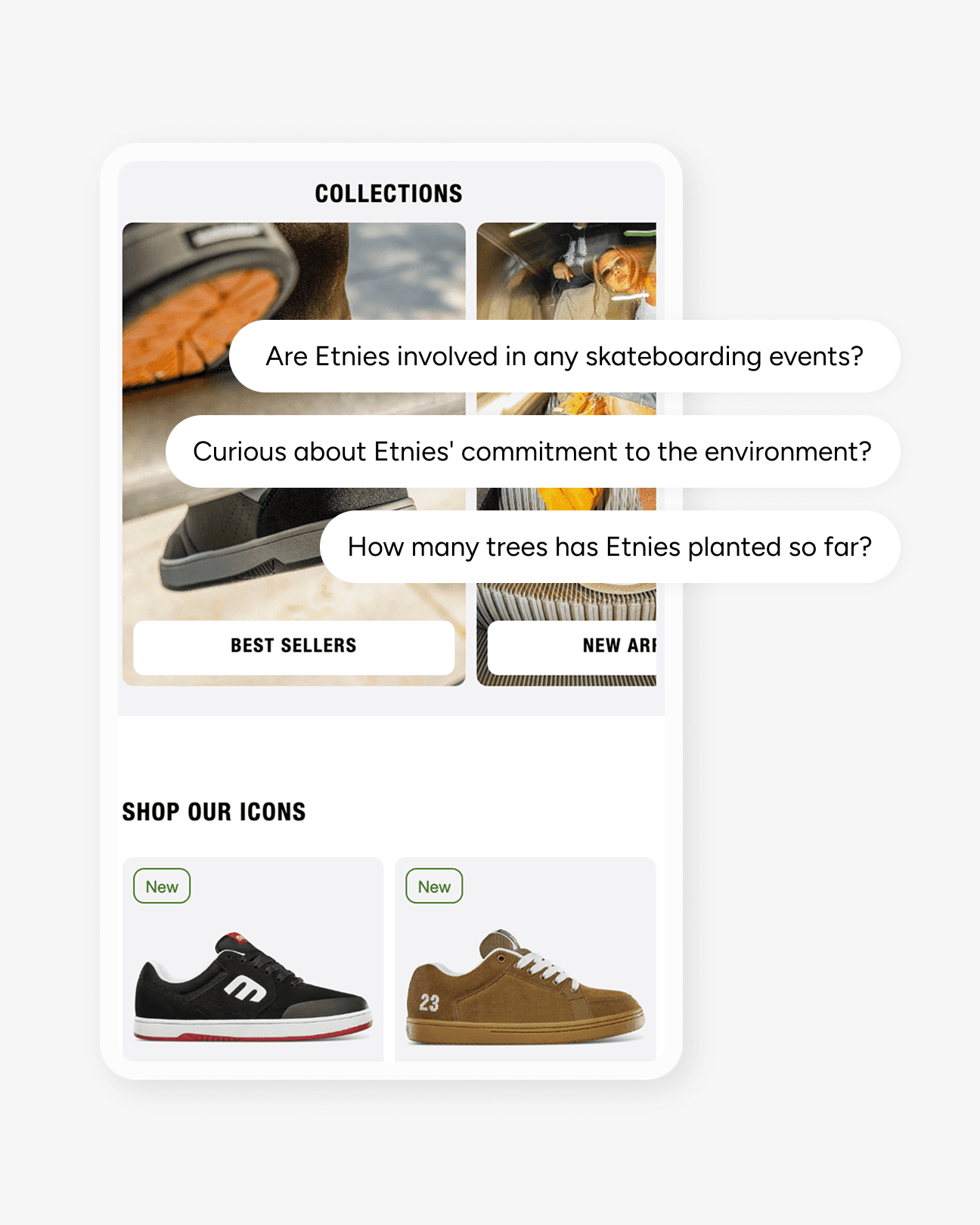
Non-product pages don't drive sales
Broader pages (categories) generated spammy, irrelevant questions.
Improvements were made for the general release:
Pre-generated first answers
We pre-generated answers to prompts with a 2-second artificial delay.
Instruction prompting
We provided additional constraints to the model around question types,
PDPs only
We removed prompts from non-product pages.
LEARNINGS
Building AI features demand a different design mindset
The biggest uncertainties came from the scraping model, not the interface. Evaluating and shaping AI behavior became as central to the design work as designing the interface itself.
Complex products requires deep foundational understanding
Chat has countless configurations and edge cases. I invested in building on my foundational knowledge and worked closely with my PM and engineers to ensure we were covering all of the different use cases.